Squats Explained for Absolute Beginners
Spend five minutes in fitness spaces and you'll hear that squats are essential. They're labeled a "fundamental movement," declared "non-negotiable," and called "the foundation of lower body training."
But nobody explains what a squat actually is if you've never done one on purpose. Nobody tells you where to start if bending your knees and standing back up feels awkward or complicated.
You're left with questions nobody wants to admit they have: How far down is down enough? What if my body doesn't bend that way? Is something wrong with me if this "basic" movement feels impossible?
This guide starts at actual zero, assumes you've never deliberately squatted as an exercise, and might not be certain what the movement even involves.
No jargon. No assumptions about your fitness background. Just clear explanations of what squats are, why they're worth learning, and how to do them in ways that work for your specific body.
What the Movement Actually Involves
A squat is the pattern of lowering your body toward the ground by bending your hips and knees, then returning to standing.
That's the complete definition.
You already perform this movement throughout your day without labeling it as exercise. Every time you lower yourself onto a toilet, couch, or chair and then stand back up, you're executing the squat pattern. When you bend down to retrieve something from a low shelf or the floor using your legs rather than just folding at your waist, you're doing a squat variation.
The distinction between those daily movements and "squatting" as exercise is consciousness and control. You're deliberately performing the pattern, paying attention to execution, and typically repeating it multiple times to build strength.
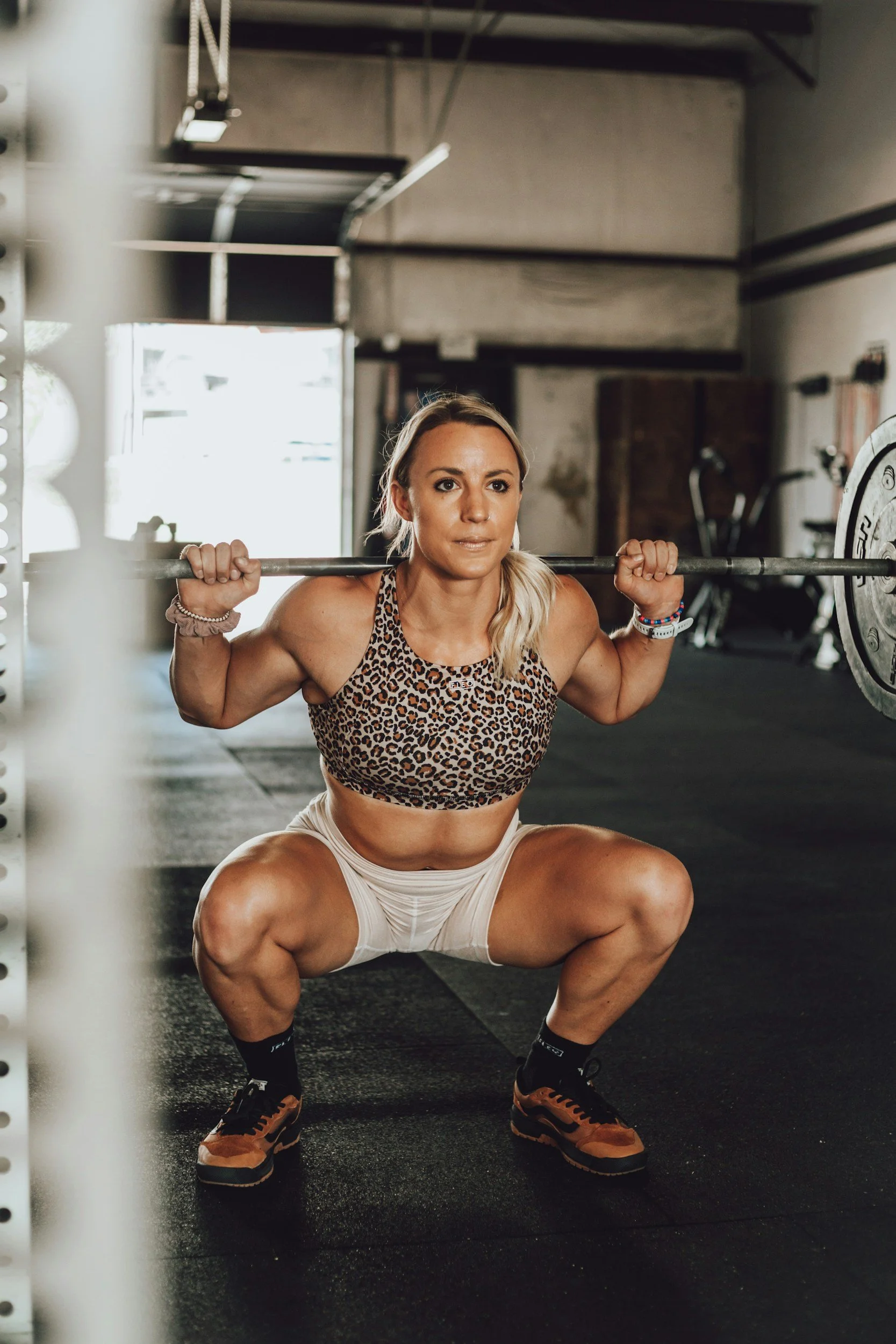
Squats train your leg muscles, primarily your quadriceps (front thigh muscles), gluteals (buttocks), and hamstrings (back of thighs). Squats also power your core muscles, which work to maintain stability throughout the movement.
Why This Movement Actually Matters
Fitness culture treats squats like some sacred ritual that proves commitment. That's not why they're valuable.
Squats matter because they strengthen a movement pattern you rely on constantly. Every time you rise from bed, use a toilet, retrieve dropped items, enter or exit vehicles, or get down on the floor and back up to interact with children or animals, you're using the same muscular patterns that squats develop.
As people become more sedentary or age, this pattern weakens. Rising from low surfaces becomes challenging. Lowering to pick things up starts requiring support from furniture or walls. Physical independence gradually diminishes because the fundamental ability to lower and raise your body isn't maintained.
The Fundamental Bodyweight Squat: Detailed Breakdown
Let's examine the most basic version: bodyweight only, no added resistance, no equipment complexity.
Your starting stance: Position your feet approximately shoulder-width apart. Your toes can point forward or angle slightly outward, whatever feels natural in your body. Some people's feet naturally turn out somewhat, and that's anatomically normal. Rest your arms at your sides or extend them forward for balance assistance.
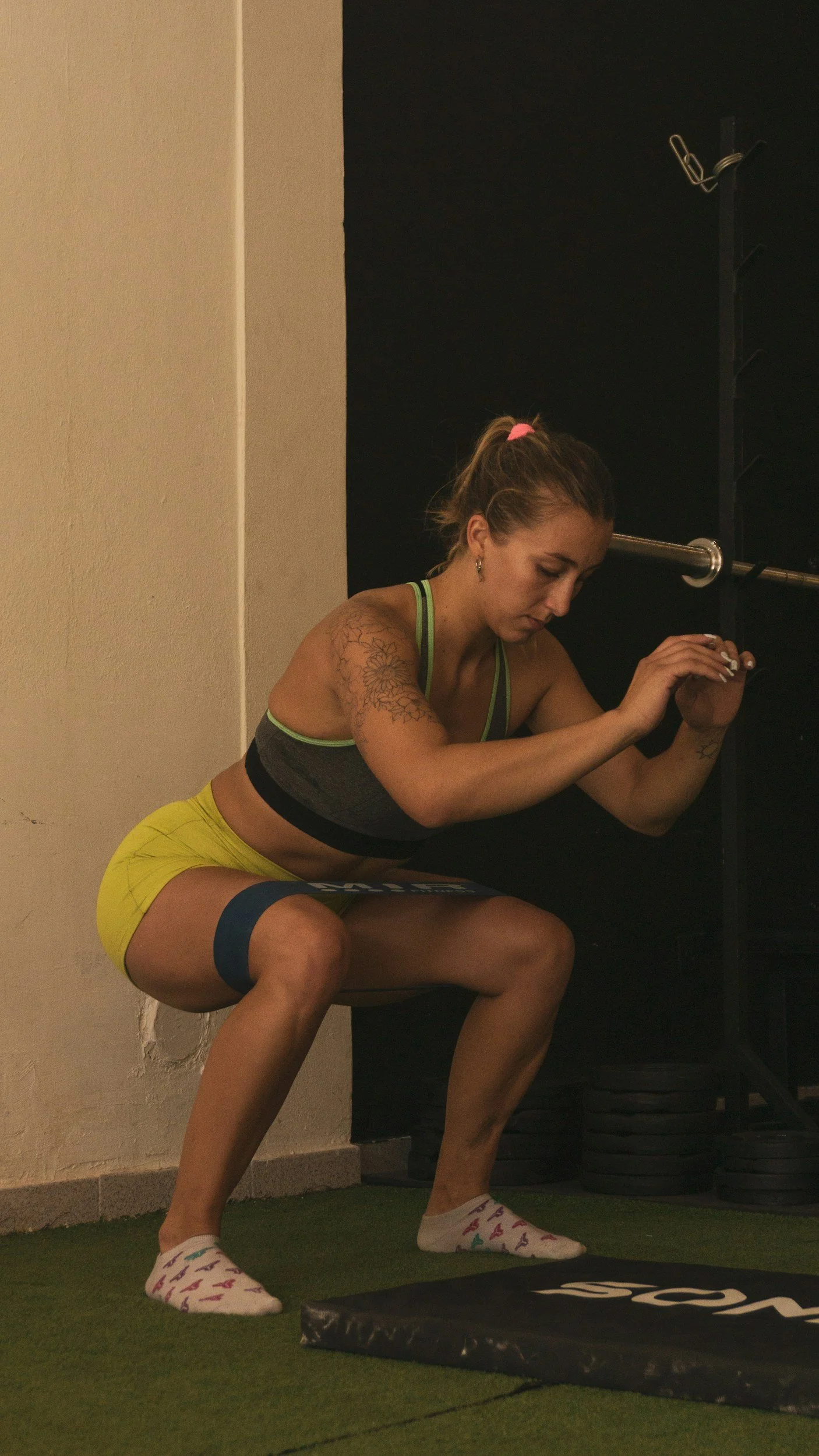
Descending: Initiate by bending at your hips and knees simultaneously, as though reaching your tailbone toward an imaginary chair positioned behind you. Your torso stays relatively upright (some forward lean is normal and biomechanically necessary). Maintain pressure through your heels and the middle of your feet. You should retain the ability to lift your toes throughout if needed.
Lower yourself as far as you can while maintaining control. For some people, that distance might be just a few inches. For others, it might be until thighs reach parallel with the floor. For some, it might be deeper. All these ranges are valid starting points.
The bottom position: At your lowest point, your knees are bent, your hips are positioned behind you, and your torso angles slightly forward. Your knees may travel forward beyond your toes (this is biomechanically normal and safe for most people). Your heels remain planted on the ground.
Rising back up: Drive through your heels and midfoot to return to standing. Visualize pushing the floor away from you rather than pulling yourself up. Your hips and chest should rise at approximately the same rate.
Return to your initial standing position. That completes one repetition.
Breathing pattern: Draw breath in during the descent. Release breath during the ascent. Don't hold your breath through the entire movement cycle.
What "Correct Form" Actually Means (And Why It's Individual)
Fitness culture obsesses over "perfect squat mechanics" and provides diagrams showing ideal angles and positions. Reality: perfect universal form doesn't exist because human bodies vary dramatically.
Some people have proportionally longer femurs (thigh bones) relative to their torsos, which means they'll lean forward more during squats. Some people have different hip socket angles, affecting optimal stance width and knee tracking patterns. Some people have ankle mobility restrictions from previous injuries or simply their skeletal structure, affecting achievable depth.
All this variation is normal. Your squat won't look identical to someone else's squat. AND THAT IS OKAY.
What actually matters for "good form":
Control: You're moving deliberately, not collapsing downward and rebounding upward.
Balance: You're not pitching forward or backward. Weight distribution stays relatively centered over your feet.
Pain-free movement: Joints don't hurt during or after. Muscle fatigue is expected and normal. Joint pain signals a need for adjustment.
Consistent breathing: You're breathing throughout, not holding your breath.
Appropriate muscle engagement: You feel work primarily in your thighs and glutes, not excessively in your lower back or knees.
If you meet these criteria, your form is functional even if it doesn't match textbook illustrations.
Common Problems and What They're Actually Telling You
"Squatting hurts my knees."
This could indicate several issues:
Inward knee collapse: Your knees cave toward each other during descent. This creates knee joint stress. Solution: Actively push your knees slightly outward as you lower. Imagine trying to spread the floor apart with your feet.
Forward weight shift: Pressure moves onto your toes instead of remaining in your heels. Solution: Emphasize sitting backward more, like reaching for a distant chair. Maintain heel pressure.
Excessive depth too soon: You're attempting a range your body isn't prepared for. Solution: Reduce depth. Partial-range squats still build strength effectively.
Your knees simply don't tolerate squatting: Some people have knee conditions (previous injuries, arthritis, structural issues), making squatting uncomfortable regardless of technique. This doesn't indicate weakness or poor execution, it means squats might not be appropriate for your body currently. Consider alternatives like glute bridges or step-ups.
"My heels lift off the ground."
This typically indicates limited ankle mobility. Your ankle joint lacks sufficient dorsiflexion (the movement bringing your shin forward over your toes).
Immediate accommodation: Place small weight plates, a book, or folded towel under your heels. This slight elevation allows squatting without heel lift.
Long-term approach: Work on ankle mobility through targeted stretches and movements. Also recognize that some people's ankle anatomy simply doesn't permit deep squatting, and that's acceptable.
"I lose balance and fall backward during deep squats."
This usually combines balance challenges and mobility restrictions. Your body's center of mass shifts too far rearward.
Solution: Hold something stable for support, whether it is a doorframe, countertop, or sturdy furniture. This allows practicing the movement pattern with security. Gradually decrease how much support you use as strength and balance improve.
Alternatively, try a wider stance, which often improves balance.
"My lower back hurts during or after."
Your lower back shouldn't dominate the work in a squat.
Potential causes:
Excessive forward torso lean: Your chest drops too far forward, straining your lower back. Solution: Focus on maintaining chest elevation. Imagine a string pulling your breastbone upward toward the ceiling.
Insufficient core engagement: Your core muscles aren't creating stability, forcing your lower back to compensate. Solution: Before descending, inhale and gently brace your core (like preparing for someone to poke your stomach). Maintain this tension throughout the movement.
Premature depth progression: You're descending beyond what you can currently control. Solution: Reduce depth until you build more strength and control.
"I can barely descend at all."
This is completely normal when beginning. Depth develops through practice, mobility work, and strength building.
Start with whatever depth you can control, even if minimal. Shallow squats are legitimate squats. Partial-depth squats are legitimate squats. You don't need maximum depth to benefit from the movement.
Gradually increase the range over weeks and months as it becomes comfortable.
Starting Points: Easier Than You Think You Need
Most people attempt full bodyweight squats immediately because that's what demonstrations show. But easier variations help you build the pattern and strength first.
Chair-Assisted Squats (Sit-to-Stand)
This is the most accessible starting point and isn't "too easy" if you're genuinely new to exercise.
Execution: Position a sturdy chair behind you. Stand in front of it. Lower yourself onto the chair in a controlled manner (don't drop onto it). Stand back up. Repeat.
This provides a clear depth target and safety if you lose balance. It eliminates uncertainty about "how far to go."
Start here if you're very deconditioned, recovering from injury, carrying significant extra weight, or simply nervous about squatting.
Touch-and-Go Squats (Box Squats)
Similar to chair squats, but instead of fully sitting and resting, you lightly contact the surface and immediately return to standing.
Execution: Use a chair, bench, or sturdy box. Squat until your glutes lightly touch the surface then drive back up.
This teaches consistent depth and provides a safety reference without fully sitting.
Supported Squats
Hold something stable and use your arms minimally to assist.
Execution: Grasp the stable object with both hands. Squat down while using your arms slightly for balance and minimal assistance. Stand back up, again using your arms slightly to help.
This allows practicing the complete movement pattern with support while leg strength develops.
Weighted Counterbalance Squats (Goblet Squats)
Once bodyweight squats feel manageable (you can perform 15-20 controlled repetitions), you can introduce weight using the goblet variation.
Execution: Hold a dumbbell, kettlebell, or heavy book vertically against your chest with both hands. Perform squats while holding the weight.
The weight serves as a counterbalance that often makes staying upright easier and frequently allows people to achieve greater depth than with bodyweight alone.
Start light: 10-15 pounds is appropriate for most beginners.
Determining Appropriate Volume
There's no universal ideal number. It depends entirely on your starting point and objectives.
If you're completely new to structured exercise: Begin with 2 sets of 5-8 repetitions, performed 2-3 times weekly. This might seem surprisingly low, but it provides sufficient stimulus for strength development without overwhelming your system.
If you're moderately active but new to squats: Try 3 sets of 8-12 repetitions, 2-3 times weekly.
If you're comfortable with squats and want continued strength development: Progress toward 3-4 sets of 12-15 repetitions, or begin adding weight with goblet squats.
Always stop when your form begins deteriorating significantly. Five controlled squats beat twenty sloppy squats every time.
Rest at least one full day between squat sessions. Your muscles require recovery time to actually strengthen.
Squat Variations You Should Ignore (For Now)
Fitness social media showcases elaborate squat variations that look impressive but aren't appropriate for beginners:
Jump squats: Adding an explosive jump at the top. Skip this until you're extremely comfortable with regular squats and have zero joint issues.
Single-leg squats (pistol squats): These demand significant strength, balance, and mobility. Not a beginner movement despite looking impressive online.
Barbell back squats: The classic gym squat with a barbell across your upper back. Not inherently problematic, but not a beginner starting point. Master bodyweight first, then goblet squats, then consider barbell work if it interests you.
Sumo squats, Bulgarian split squats, sissy squats: All legitimate exercises, but all variations that come after mastering the fundamental pattern.
The internet showcases advanced variations because they're visually impressive. But impressive doesn't equal appropriate for your current level. Start with foundations.
Alternatives If Squats Don't Work for Your Body
Not everyone should squat. Some bodies genuinely don't tolerate the movement well due to injuries, joint conditions, or structural limitations.
If you've tried multiple squat variations with careful attention to technique and they consistently cause pain (not muscle fatigue but actual joint pain), try these alternatives training similar muscles:
Glute bridges: Lie on your back, knees bent, feet flat. Lift your hips toward the ceiling, contract your glutes, lower back down. Trains glutes and hamstrings without knee stress.
Step-ups: Step up onto a sturdy box or platform with one foot, step down, repeat. Trains legs unilaterally with less joint stress than squats.
Leg press (with gym access): The leg press machine allows training the squat pattern while machine-supported, reducing balance demands and often feeling more comfortable for people with knee issues.
Wall sits: Stand with your back against a wall, slide down until thighs are roughly parallel to the floor, hold this position. Builds leg strength isometrically (without movement).
No rule mandates that you must squat. If another exercise works better for your body, do that instead.
The Actual Goal: Functional Capability, Not Perfect Technique
Here's what genuinely matters: maintaining the ability to lower your body and return to standing without assistance, without pain, and without it being a major struggle.
If squats help you build and maintain the leg strength enabling free movement through your life, they're valuable. If they don't, find a different tool.
Your body doesn't care what the exercise is labeled. It only cares whether you're providing the stimulus needed to stay strong enough for the life you want to live.
Start wherever you actually are. Build from there. And remember that showing up and doing five squats (or chair squats, or any variation) is infinitely more valuable than planning to do perfect squats someday but never beginning.
