What Warm-Ups and Cool-Downs Actually Do
Most people treat these as the tax you pay to do the real workout. In fact, it is something you may have heard all of your life, but never really understood why so it can be easy to skip. Five minutes of something vaguely purposeful at the start, and at the end, nothing at all.
I'd defend the warm-up strongly and the cool-down on completely different grounds than the ones usually given, because the evidence on these two is nowhere near as symmetrical as the way they're always paired together implies.
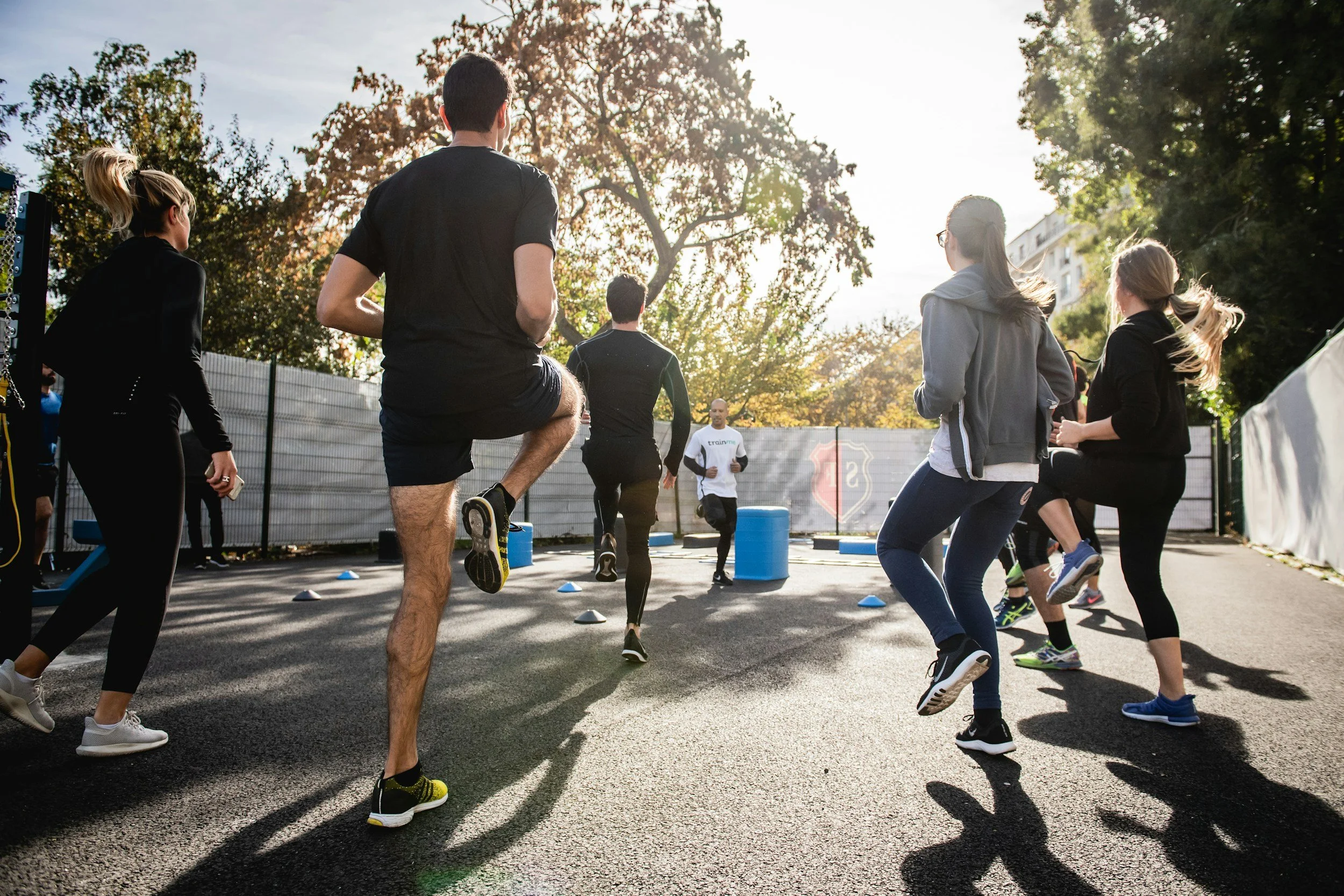
The Warm-Up Earns Its Time
Here's what a warm-up does that you can feel within about four minutes: it raises the temperature of your muscles, gets blood moving where it's needed, and wakes up the coordination between your brain and the tissue that has to do the work. A cold muscle is stiffer, slower, and less responsive. A warm one isn't.
The performance case holds up reasonably well. A review of warm-up studies found improved performance across most of the measures examined, though the authors noted the quality of the underlying research was often mediocre (Fradkin et al., 2010). So: not a transformation, but you'll move better and feel more capable in your first working set than you would going in cold. That matters more than it sounds, because the first set often sets the tone for the whole session.
The injury-prevention argument gets stated with far more confidence than the evidence supports, and I'd rather not repeat it. What I'd say instead is that warming up makes the early part of your workout considerably less unpleasant, and that's a legitimate reason by itself. The first set of squats when you're cold feels bad enough that people quietly decide they don't like squats. It's not the squats. You asked a cold body to do something very demanding with no notice.
One adjustment worth making: don't build your warm-up around long static stretches. Holding a stretch for a minute or more before training can temporarily reduce strength and power output. The effect is smaller with brief holds followed by movement, but it's real enough that sitting on the floor pulling on your hamstrings is a poor use of the ten minutes (Behm & Chaouachi, 2011). Move instead. A few minutes of easy cardio, then the movements you're about to do at a much lighter load. Empty bar before loaded bar. That's the whole thing.
The Cool-Down Doesn't Do What You Were Told
This is where I disagree with most of what you've read.
The cool-down is usually sold on physiological grounds. In other words, clearing lactic acid, preventing soreness, speeding recovery. A thorough review of those claims found that active cool-downs don't reliably reduce next-day soreness or improve most recovery markers, even though a few narrower effects hold up (Van Hooren & Peake, 2018). The stretching-prevents-soreness claim in particular has been tested repeatedly; a Cochrane review found no meaningful effect on muscle soreness (Herbert et al., 2011).
So if you've been skipping the cool-down and feeling guilty, you can stop feeling guilty about the part you were told it did.
I'd still argue for it, on grounds nobody puts on the poster.
You've just spent forty minutes with an elevated heart rate doing something demanding, and then you walk straight into your car, your phone, and the rest of your day. Those five minutes at the end are the only part of the session where you're not working and not yet back in your life. It's a transition, and transitions are how your brain files an experience as complete rather than as something that just stopped.
That matters more for consistency than for physiology. Ending deliberately, in other words, walking easy, breathing, and noticing you feel different than you did an hour ago is how a session gets stored as something that went well. Grabbing your bag and rushing out is how it gets filed away as just one more thing you crammed into your day. Same workout, different memory, and the memory determines whether you want to come back Thursday.
Stretch at the end if you like it. It won't do much for soreness, but a warm body is a better time to work on range of motion than a cold one, and enjoying it is sufficient reason. Just don't do it because you were told it prevents something.
What This Actually Looks Like
Before you train: five minutes of easy movement to get warm, whether walking, biking, rowing, or whatever's there. Then two lighter sets of whatever you're about to do. If you're squatting, squat with nothing, then squat with a little. Ten minutes, generously.
After you train: three to five minutes of walking or something equally undemanding, until your breathing is normal and you don't feel rushed. Then leave.
What I'd resist is the elaborate mobility routine that turns a thirty-minute workout into a fifty-minute commitment. That extra twenty minutes is exactly what gets skipped on a busy week, and it usually takes the workout down with it.
Ten minutes at the front, five at the back. The front part is part of the workout. The back part is part of why you'll come back.
