Starting Fitness Over 50: What Changes and What Doesn't
There's a belief sitting underneath this question that stops more people than any physical limitation does.
The belief is that you've missed the window and that fitness is something you build in your twenties and maintain afterward, and starting now means playing catch-up on a game already decided. It's rarely stated that plainly. It shows up as “at my age”, tacked onto the end of sentences.
It's wrong. A meta-analysis of resistance training in older adults found consistent, meaningful strength gains across studies (Peterson et al., 2010), and one of the trials that first made researchers take this seriously put nonagenarians (90-99 years old) through eight weeks of high-intensity strength training and measured substantial improvement (Fiatarone et al., 1990). That was ten people, so it's a striking result rather than a definitive one, but the broader literature has borne it out. The capacity to adapt doesn't switch off with age.
You haven't missed anything. But some things are genuinely different now, and pretending otherwise would be its own kind of unhelpful.
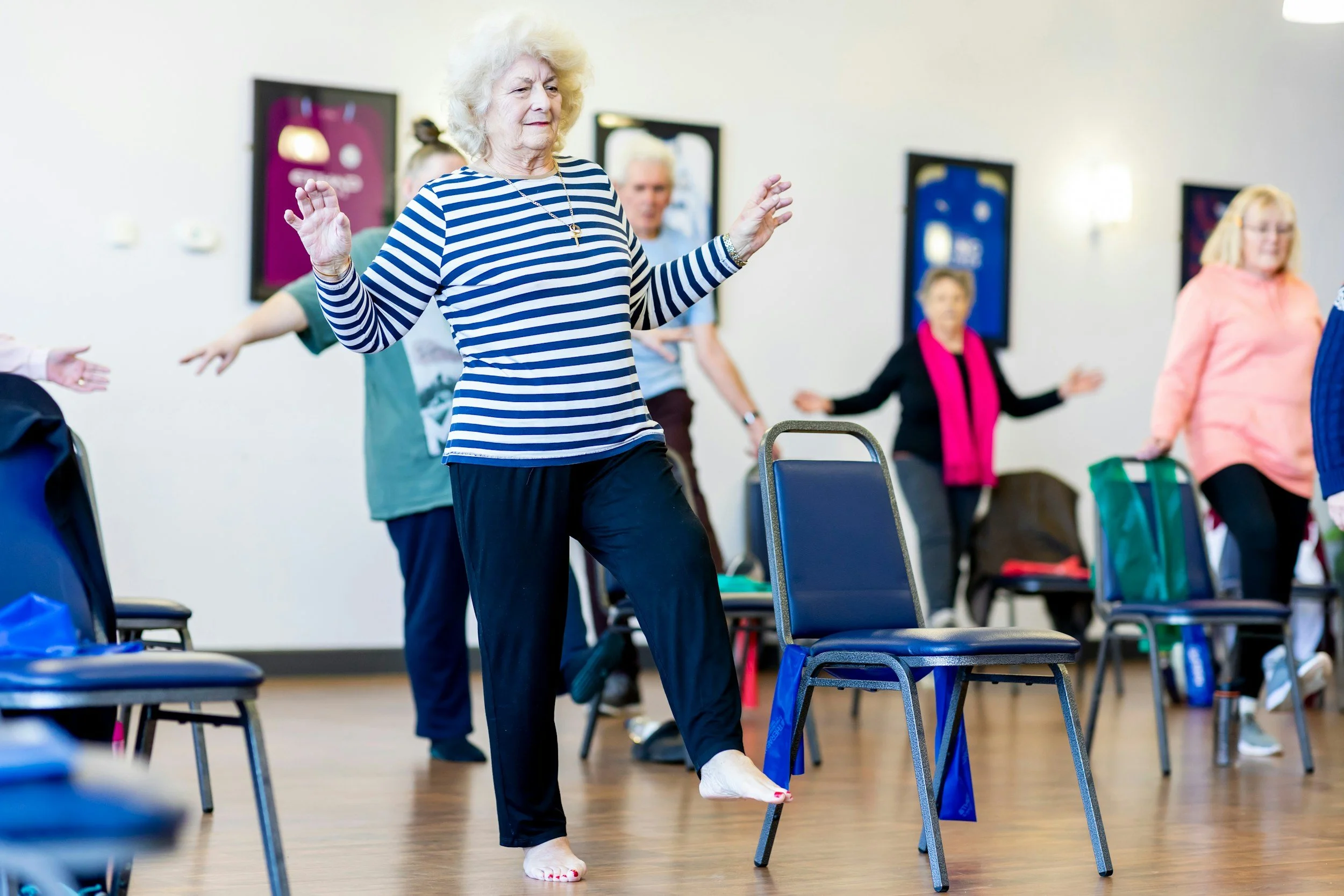
What Actually Changes
The main one is that muscle loss is already happening, and it's the strongest argument for starting rather than against it. From roughly your thirties onward, adults lose muscle mass gradually, and the rate tends to pick up later in life. That process is behind a lot of what people write off as just getting older. Adults start to notice that things feel heavier, stairs get harder, and balance becomes less certain. Resistance training is the most direct thing you can do about it.
Recovery takes longer than it used to. You'll feel sessions for more days than you would have at 25, and training the same muscles hard back-to-back is a worse idea than it once was. That means more space between hard sessions, not fewer sessions overall.
Connective tissue also adapts more slowly than muscle, and this is the most common way people over 50 get hurt when starting out. Your muscles get stronger faster than your tendons and ligaments strengthen to match, so you can lift more than your joints are ready for. Then you do, and something in your body complains. Progress more slowly than you feel capable of to match your rate of loading to the slowest-adapting tissue.
Balance and bone density become worth training deliberately rather than hoping they come along for free. Both respond to the kind of work you'd be doing anyway, and both matter in a way they didn't at 30.
And you may be managing something, whether that be blood pressure, joints, a previous injury, or medication. Not everyone manages this, but it is common enough to name, and worth a conversation with your doctor first if any of it applies.
What Doesn't Change
Nearly everything else, which is the part people don't expect.
The mechanism is identical. You challenge a muscle, it adapts, you get stronger. That works the same at 55 as at 25. The rate may differ, but the process doesn't.
The exercises are the same too. There's no separate over-50 movement catalogue. Squats, hinges, presses, pulls, and carries are the foundation regardless of age. You may need to change the range, the load, or use a machine instead of free weights, but that's true of beginners at every age. It's about your current capacity, not your birth year.
Consistency still beats intensity. Two or three sessions a week done reliably will produce more than an ambitious program you abandon.
The mental barriers are the same, with one addition. Gym anxiety, comparison, feeling out of place, fear of looking foolish, are all identical, with age layered on as an extra reason to feel self-conscious. It is worth knowing that the extra reason isn't more valid than the others. People in gyms aren't evaluating your age any more than they're evaluating anything else about you, which is to say far less than you'd think.
And progress is still mostly invisible early. Strength climbs well before anything shows. Same as it is for everyone.
What I'd Actually Do
Start with resistance training rather than cardio. This is the opposite of what most people over 50 default to. Cardio is good and you should do it, but muscle mass is the thing you're actively losing, and it determines whether you can carry groceries and get off the floor in fifteen years. If you only do one thing, lift.
Two sessions a week is a real starting point, not a compromise. Full body, six or eight exercises, machines are fine.
Go lighter than you think and progress slower than you want. The urge to test yourself early is strong, especially if you were athletic once. That memory of what once was, can be the most dangerous thing you'll bring into the gym. Your nervous system remembers what you used to do. Your tendons don't.
Add balance work, because it costs nearly nothing. Standing on one leg while you brush your teeth counts.
Pay more attention to protein than you did at 30. An expert panel reviewing the evidence recommended that older adults aim for more daily protein than standard adult guidelines suggest, on the reasoning that aging muscle responds less readily to the same amount (Bauer et al., 2013). Practically: get some at every meal rather than most of it at dinner.
And expect real soreness for two or three days after your first several sessions. Normal, and it stops being severe within a few weeks.
The Thing Worth Saying Directly
The people I've watched start after 50 tend to be better at this than people who start at 25, and it isn't close.
They show up. They don't chase the newest program. They aren't training for a photo, so they don't quit when the photo doesn't materialize. They usually have a clearer reason (playing with grandchildren, avoiding what happened to a parent, staying independent, etc.) and reasons like those survive the boring months in a way aesthetic goals rarely do.
There's a version of the next thirty years where you get up off the floor unassisted, carry your own bags, and go where you want without planning around your body. There's another version where you can't. What you do with strength training in the decades ahead has a lot to say about which one you get, and that's a far better reason to start than anything to do with how you look.
You're not late. You're at the point where it starts mattering most.
General information, not medical advice. If you have a heart condition, uncontrolled blood pressure, joint problems, or you've been inactive for a long stretch, talk to your doctor before starting, not as a formality, but because the answer occasionally changes the plan.
