How to Use a Fitness Journal to Stay Motivated
Staying motivated with fitness is about having something steady to come back to when your energy dips. A fitness journal can be that anchor, not as a rulebook but as a place to notice what’s actually happening as you move your body.
Used the right way, a journal doesn’t add pressure. It reduces it. And even more fun, it can be a great way to notice changes over time when you can’t visibly see them.
Why Writing Things Down Changes How You Show Up
Most people quit not because they don’t care, but because progress feels invisible. Days blur together. Effort gets forgotten.
A fitness journal slows that down.
When you write, you capture moments that would otherwise disappear: the workout you almost skipped, the walk that cleared your head, and the day you felt awkward but stayed anyway. Seeing those moments later changes the story you tell yourself about consistency.
It turns “I’m not doing enough” into “I’m showing up more than I think.”
What a Fitness Journal Is For
A journal isn’t there to monitor or correct you. It’s there to reflect back what’s real.
It works best when it’s:
Observational instead of critical
Flexible instead of rigid
Focused on effort, not perfection
If it ever starts to feel like homework, it’s doing too much.

What to Actually Write
You don’t need prompts that take ten minutes to fill out. A few honest notes are enough.
Start with these three things:
What you did
This can be simple. “Walked.” “Lifted for 20 minutes.” “Stretched before bed.” The length doesn’t matter.
How it felt
Not how it “should’ve” felt, how it did.
Heavy. Lighter after. Awkward. Better than expected.
One thing that went right
This might have nothing to do with performance.
You went despite nerves. You stopped before burnout. You didn’t quit early.
These details add up faster than numbers ever do.
Why This Builds Motivation Over Time
Motivation usually fades when doubt takes over. A journal interrupts that.
On low-energy days, you’re not relying on memory, you’re looking at physical proof. You see patterns. You remember past dips that didn’t end everything. You notice that effort shows up in different forms.
That perspective makes it easier to keep going without forcing yourself.
How Often You Need to Journal (Hint: Less Than You Think)
There’s no rule here.
Some people write after every workout. Others check in once a week. Some only journal during rough stretches. All of that counts.
The best frequency is the one that doesn’t make you sigh when you think about it. For me personally, I have found it helpful to write how I finished a particular workout to see if I can try more the next round. Life happens, and I don’t expect to remember how much weight each exercise called for or even how I felt after doing just this same exercise a week ago.
Paper or Digital: Which Is Better?
Neither is better, only different.
Paper journals slow you down and feel more personal. Digital tools are quick and easy to keep nearby. If you already track workouts on your phone, adding notes there can be enough.
Choose what fits into your life without friction. Below are links to some journals recommended by members of the Feel Fit Community.
If you don’t want to buy anything right now, try keeping notes in the Notes App on your phone. This can be about the amount of weight you can lift per exercise and how it felt. Below is a screenshot from my phone on how I track my progress for a particular day:
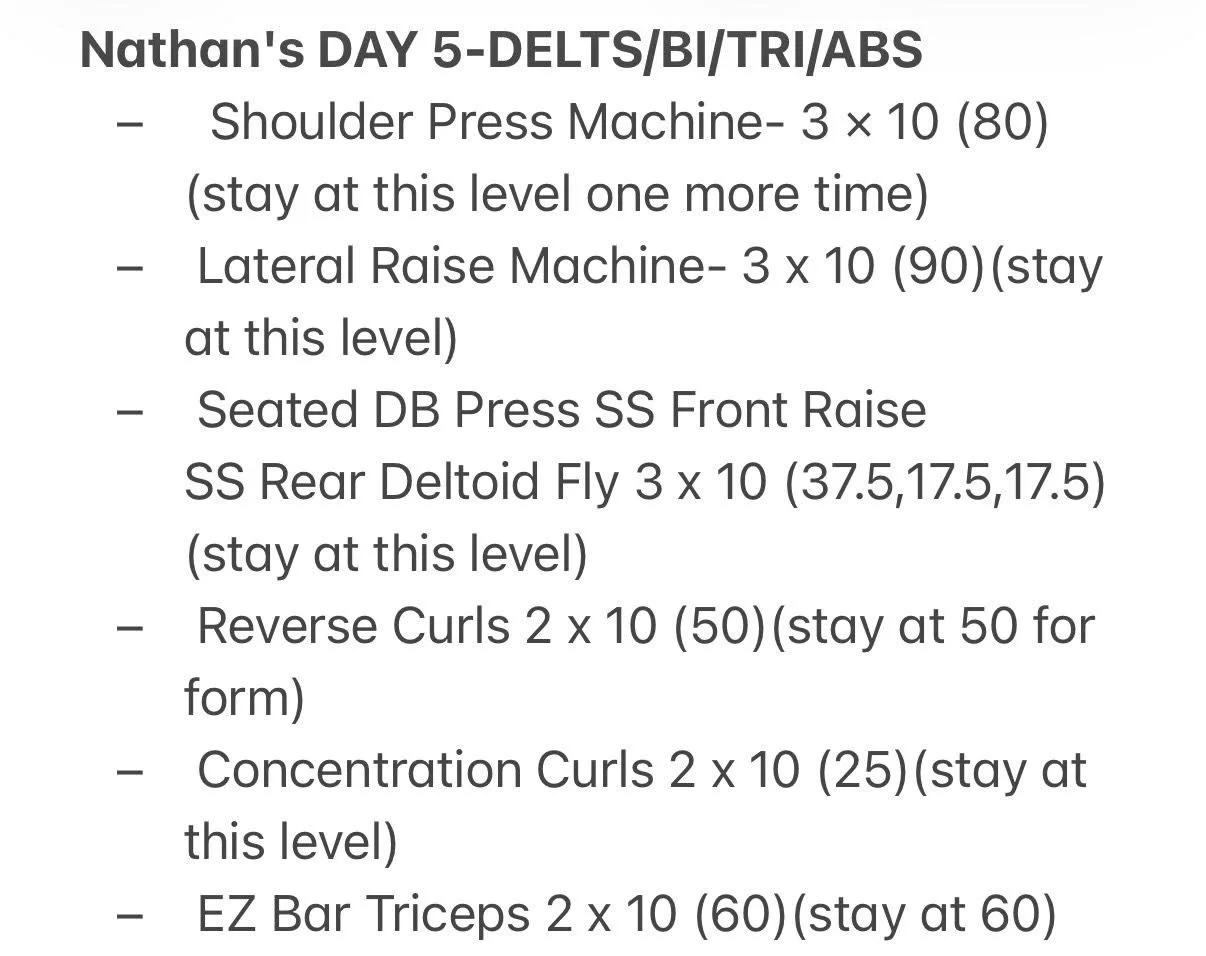
This is a focus on my workouts from a numbers perspective. I list the exercise, how many sets and reps, and how much weight I can reasonably lift for that amount of reps and sets. If I feel like I can increase the next time, I note that. If I need to stay at that weight level, I will write it after finishing the exercise.
Beginner-Friendly Fitness Journal Options
Lines A Day Wellness Planner – Helpful to combine fitness, mindset, and daily habits in one place
Check it out on Amazon here: Click HereSimple Workout Log – For jotting down movement and short notes about exercises, and budget-friendly
Check it out on Amazon here: Click HereDetailed Workout Journal – Gym Reapers makes a detailed fitness journal that can encompass goals and a monthly overview
Check it out on Amazon here: Click Here
The best journal is the one you’ll actually open again tomorrow.
Keeping Journaling Supportive
If you notice yourself avoiding the journal, scale it back. Write one sentence. Or skip it until it feels useful again.
This is a tool to get you thinking and reflecting on how exercise is working for you. Having the extra time to stop and think about what went well helps to silence the inner critic that derails motivation.
Final Thought
A fitness journal won’t magically make motivation appear. What it does is quiet the noise and anxiety that can accompany going to the gym. At the end of the day, tracking progress and numbers are there when it seems like nothing is working.
It helps you notice effort, remember progress, and stay connected to your own reasons for moving. Over time, that awareness builds consistency without pressure.
