You step on it before anything else. Before coffee, before you've properly woken up, wearing as little as possible because you've learned that that seems to matter.
Then the rest of the morning gets decided by what it says. Up a pound and something in the pit of your stomach tightens. The day starts on the back foot, with a running commentary underneath everything until about lunchtime. Down a pound and you feel light, capable, like the week is going to go well.
Either way, a number you have limited control over just took charge of your mood.
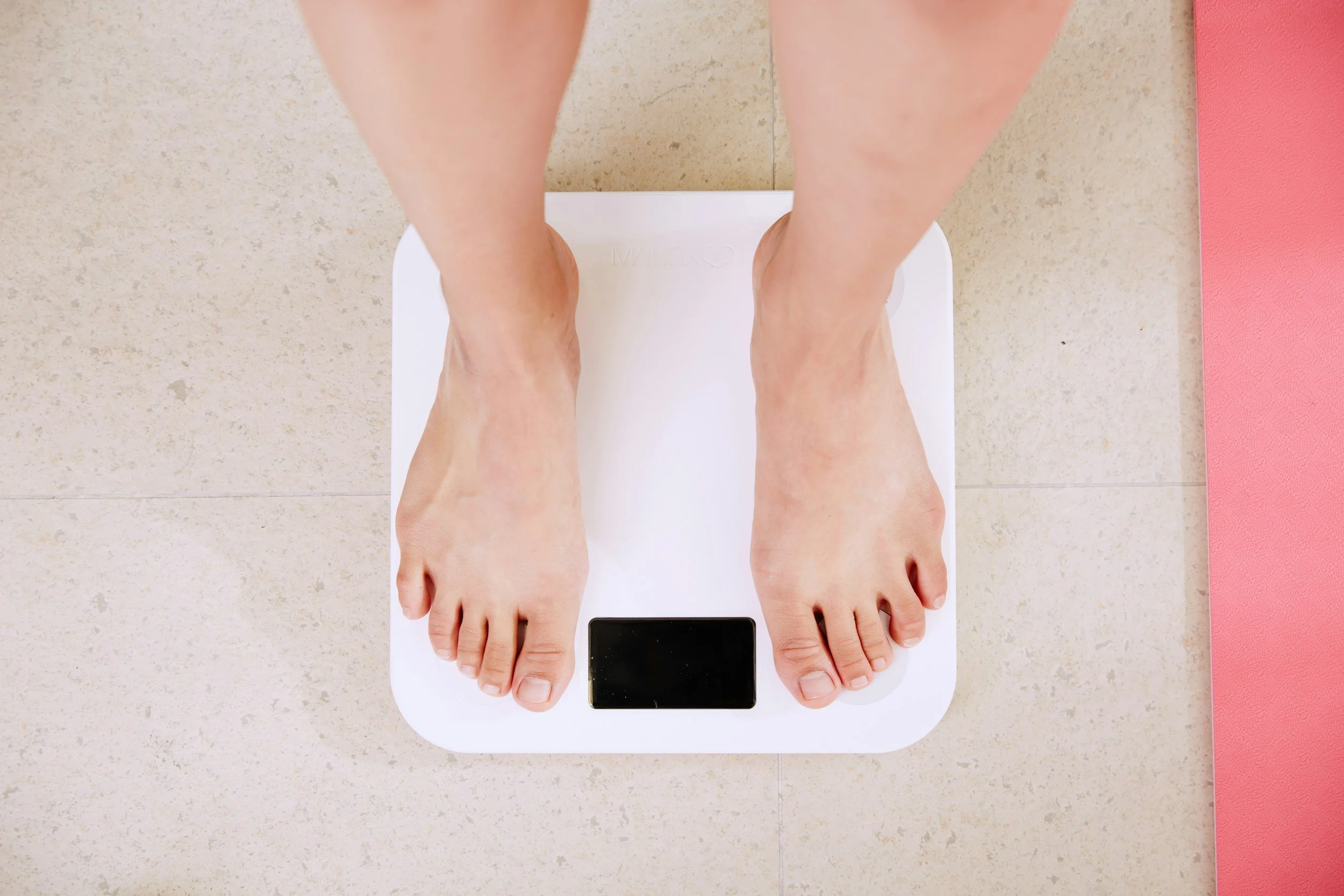
The Number Is Noisier Than You Think
Start with the mechanical part, because a lot of the distress comes from not knowing this.
Your weight moves several pounds within a day and across days for reasons that have nothing to do with fat. Water shifts with sodium, carbohydrate intake, hydration, heat, and hormones. Food sitting in your digestive system has weight. Muscle holds extra water while recovering from training, which means a hard session can push the scale up two days later. All of this while you're doing everything right.
So the pound you gained overnight isn't fat. It can't be. Gaining a pound of fat requires a substantial energy surplus, and you did not manage one between Tuesday and Wednesday.
What you react to each morning is mostly noise. Plot your weight daily for a month and you'd see a jagged line with a trend buried inside it. Please don’t treat every point like a verdict.
That isn't a mindset failure. It's a measurement problem. You're sampling a noisy signal at the highest possible frequency and trying to read meaning into every reading.
Why It Hits So Hard
If it were only a measurement, you'd shrug. It isn't only a measurement.
For a lot of people the number stopped meaning body mass a long time ago and started meaning something closer to “how am I doing”. Whether you've been good. Whether the effort is working. Whether you're someone who has this handled.
That's why two pounds can affect a whole day. You're not upset about two pounds. You're getting what feels like a daily performance review on your self-discipline, delivered by a device on the bathroom floor before you've had a chance to defend yourself.
There's a pattern in the research that makes this worse, though it comes from a different setting than a morning weigh-in. In laboratory work on restrained eating, people who believed they'd broken their own rules often responded not by tightening up but by abandoning control for a stretch. The reaction to the perceived lapse caused more disruption than the lapse itself (Herman & Mack, 1975). Applying that to the bathroom scale is an extension rather than a finding. But it matches what a lot of people describe: a bad reading in the morning genuinely predicts a worse day, which produces a worse reading, which confirms the story.
Whether to Weigh Yourself at All
I want to be even-handed here, because the advice in both directions is stated too confidently.
Regular self-weighing does seem to help some people. A systematic review found frequent self-weighing associated with better weight management outcomes, likely because it provides feedback that keeps behavior on track (Zheng et al., 2015). That's an association rather than proof of cause, but it's worth knowing before you throw the scale out.
Whether frequent weighing causes psychological harm is less settled. It's a live concern in the field, particularly for people with existing body image difficulties or a history of disordered eating, and I'd treat the question as genuinely open rather than pretending there's a clean answer.
Which leaves it depending on you, and you probably already have the evidence. If stepping on the scale gives you information you use, keep doing it. If it gives you a verdict that reshapes your day, it's costing more than it provides, and no rule says you have to own one.
What Actually Helps
Look at the trend, not the reading. If you weigh daily, stop reading the daily number and read the weekly average instead. Most tracking apps calculate it for you. The average smooths the noise and shows the thing you actually wanted to see. If you'd rather weigh less often, once a week at the same time under the same conditions works just as well: less data, far less emotional exposure. Either way, meaningful change takes weeks to appear, so the comparison worth making is this month against last month, not today against yesterday.
Measure things the scale can't see. What you lifted. How many reps. How the stairs feel. How your clothes fit. These move on a timescale you can actually perceive, and they improve during exactly the weeks when your weight is doing nothing. Which is when you most need evidence that something is working.
And decide in advance what you'll do with the number. The distress lives in the gap between seeing a reading and knowing what it means. If your rule is “I look at the weekly average on Sunday and change nothing unless the trend holds for a month,” then Tuesday's number has no job. It's a data point with no authority.
Take Some Time With This Next Part
The scale measures your relationship with gravity. That's all it does.
It doesn't know you trained four times this week. It doesn't know you're stronger than you were in March, or that you slept better, or that your knees stopped bothering you on stairs. It doesn't distinguish muscle from fat from water from dinner. It produces one number compressing all of that into something you then read as a grade.
You've been letting a scale evaluate you on things it has no access to.
If checking it is useful, check it, and treat the result as one input among several. If it's been running your mornings, the reasonable move is to stop handing it that job. This isn’t to be used as avoidance, but because a tool that makes you worse at what you're trying to do isn't one you need.
Put it in a cupboard for a month and track your training instead. You'll know more about your progress at the end of that month than the daily number was telling you.
If the number on the scale drives a lot of your day, or you find yourself weighing repeatedly, or a bad reading changes how you eat, that's worth talking through with a doctor or therapist. It's common, it's treatable, and it's a bigger thing than an article can address.
