How to Ask for Help Without Feeling Like You've Failed
You've been standing near the cable machine for four minutes, watching someone else use it, and trying to work out the attachment from a distance.
There's a staff member fifteen feet away doing nothing in particular. You could ask. It would take twenty seconds and then you'd know.
You don't ask. You pick a different exercise, one you already understand, and tell yourself you'll figure the machine out another time. Then you do the same thing the following week.
What happened there isn't about the cable machine. Somewhere along the way you decided that needing to ask was an admission, and admissions have a cost you'd rather not pay.
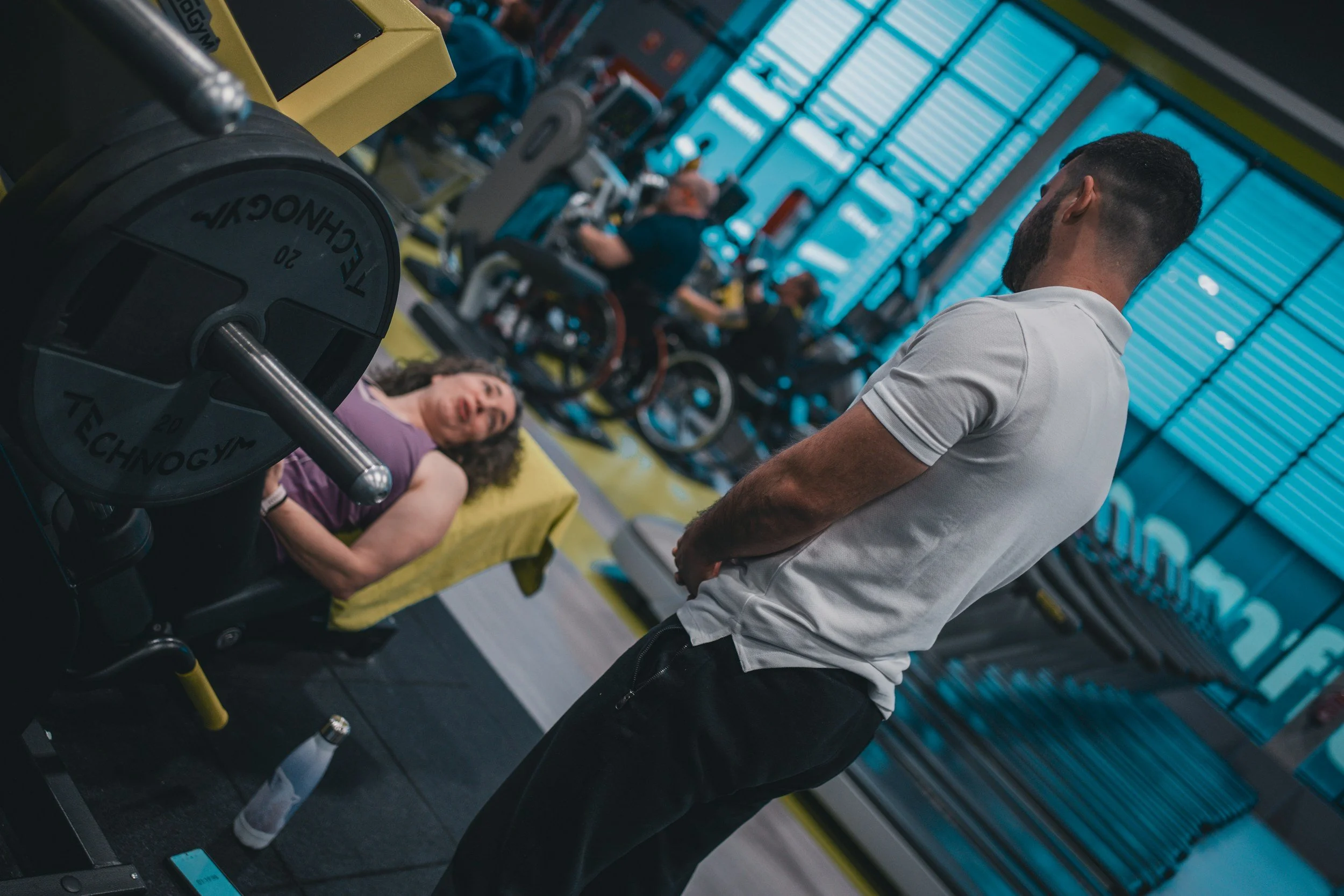
The Trade You're Actually Making
Asking costs you twenty seconds of mild discomfort and a brief moment where someone knows you didn't know something.
Not asking costs you the exercise, this week and probably for months. It costs you a sense of the gym as a place where you have to already know things. It costs you a slower learning curve, because everything you don't ask about you either work out alone or leave alone.
Written down, it isn't close. And you already know it isn't close, which is the frustrating part. This was never an information problem. We live in the age of the internet and you could probably search the name of it. You're not confused about whether asking would help.
What's in the way isn't a belief. It's a feeling that needing help means something about you.
Where That Comes From
A few things feed it, and they're not equally true.
Some of it is a story about self-sufficiency that runs strong in fitness culture. The whole aesthetic is grit, discipline, doing it yourself. Against that backdrop, asking how a machine works feels like a small confession of not belonging.
Some of it is that you've cast yourself as the beginner and you're trying to minimize the evidence. If you already feel self-conscious, asking a question voluntarily draws attention. Which is the exact thing you've spent the session avoiding.
And some of it is assuming the other person will think less of you. That part appears to be wrong.
People consistently underestimate how willing others are to help. In a series of experiments where participants made direct requests of strangers (borrowing a phone, filling in a questionnaire), they predicted far more refusals than they actually received (Flynn & Lake, 2008). We overestimate the cost of asking and underestimate the willingness of the person asked.
There's a related finding worth knowing, though it comes from a different setting. In laboratory studies of advice-seeking in professional contexts, people worried that asking for advice would make them look incompetent, and the opposite happened, with advice-seekers rated as more competent by the people they asked (Brooks et al., 2015). That's workplace research rather than gym research, so I'd hold it loosely. But it suggests the specific fear driving this: “they'll think I'm an idiot” may be not just overstated but backwards.
Why It Feels Like Failure
Two things get tangled here and they need different responses.
The first is not knowing something. That isn't failure, it's the ordinary condition of being new. Nobody is born knowing how a lat pulldown attachment works. Every person in that building learned it from someone or fumbled through it publicly.
The second is needing help to continue. That's the one that stings, because it implies you couldn't manage it alone. If your self-image involves being someone who handles things, it lands harder.
But look at what you're claiming when you refuse to ask. You're claiming you should already have knowledge you've had no opportunity to acquire. That's not a high standard, it's an impossible one, and holding yourself to it doesn't make you more capable. It makes you slower, and it keeps you doing the three exercises you understood on day one.
How to Actually Do It
Ask smaller than you think you need to. You don't have to explain that you're new or apologize first. “How do you set this up?” is a complete sentence. The preamble is what makes it feel exposing, and the preamble is optional.
Ask staff before other members. It's their job, they've answered it a hundred times, and it removes the social calculation entirely. Most gyms also offer a free orientation that almost nobody takes. Ask for it even if you've been a member for six months.
Ask between sets, not during. That's the one real etiquette rule. Someone mid-set isn't available; someone on a bench looking at their phone is.
Use a question with a short answer. “Is this how you do it?” or “What's this meant to work?” invites a quick reply rather than a lecture, which lowers the cost for both of you.
And pay attention to what actually happens. Ask one question this week and notice the response. Nearly always it's mild helpfulness followed by both of you moving on. That's the evidence that eventually changes the feeling. You don't reason your way out of this, you accumulate uneventful experiences until the fear stops being credible.
The Bigger Version
The gym question is a small instance of something larger.
The same reflex that stops you asking about a machine stops people hiring a coach, joining a class, telling a friend they're struggling, or admitting to a partner that they need help getting out of the house twice a week. It's the same move each time: treating the need for support as a verdict on your capability.
It isn't. Support is how most people accomplish most things. The version where someone does it entirely alone is rare enough that we tell stories about it, which should tell you how uncommon it is rather than how normal.
You're allowed to need instruction. You're allowed to need a person. Both are the standard condition of learning to do something you haven't done before.
Ask about the machine. It's twenty seconds, and you've spent four minutes already.
