Should I Work With a Personal Trainer?
So you're thinking about hiring a personal trainer. The good news is that it could include a lot of different types of people who want to go to the gym. Maybe you're new to fitness, or maybe you've hit a plateau. Maybe you need someone to keep you accountable.
But you're also wondering: Do I actually need one? Will it make a difference? Is it worth the money?
The answer is: sometimes, but not always.
Personal training is a tool that works for some people in some situations. For others, it's unnecessary.
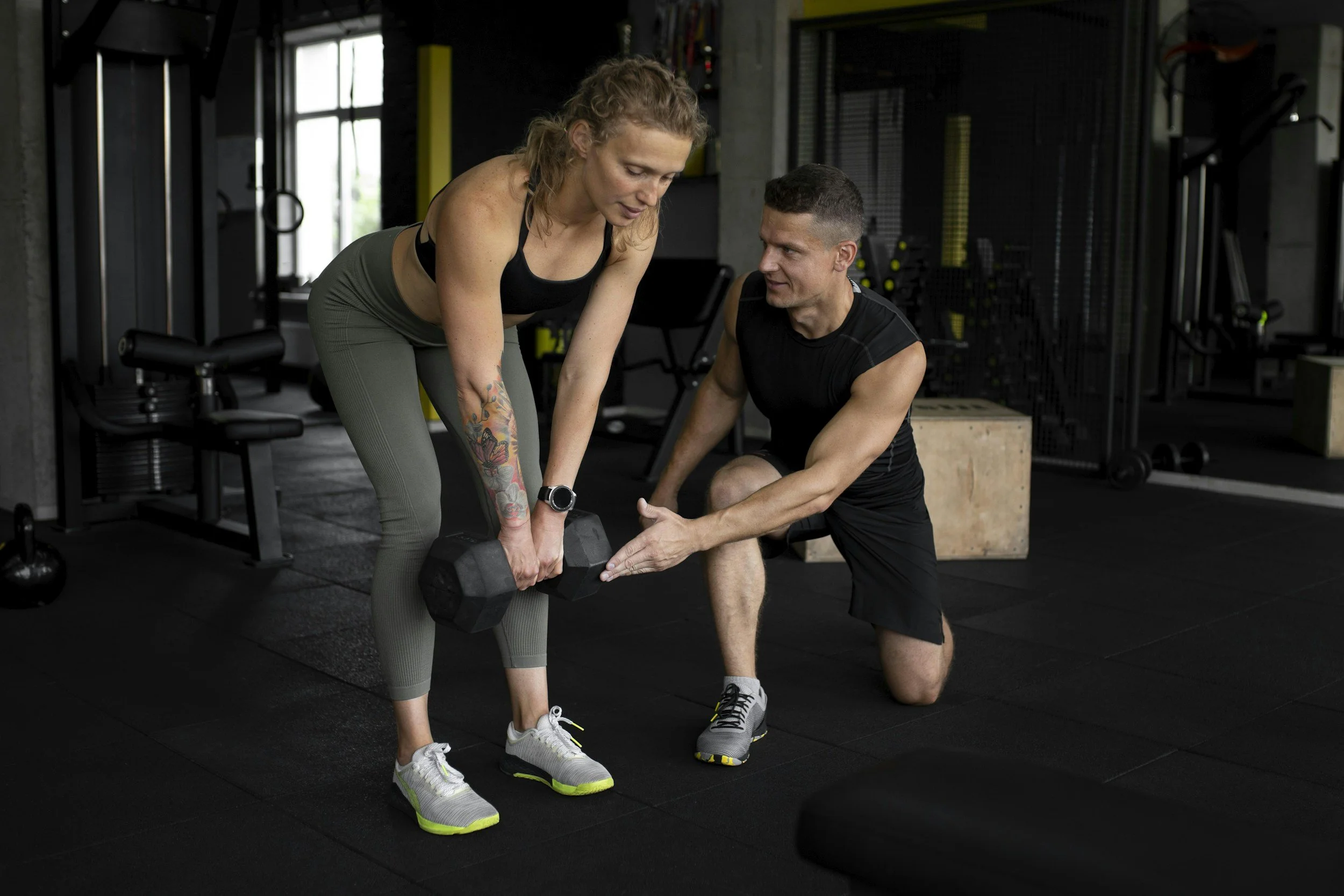
What a Personal Trainer Actually Does
Before deciding to work with a personal trainer, you should understand what you're paying for.
Form Correction
A trainer watches your movement and adjusts your form to prevent injury and improve effectiveness.
This is crucial. Bad form can create injury and reduce exercise effectiveness.
Research shows proper form significantly reduces injury risk (Schoenfeld et al., 2016).
Personalized Programming
A trainer designs workouts for your specific goals, fitness level, and limitations.
This is more efficient than generic routines. It is possible that personalized programs exist online, and you can find one for yourself, but working with a trainer guarantees that you are following something exclusive to you.
Accountability and Structure
Knowing someone is expecting you at a specific time makes you more likely to show up.
Research shows external accountability increases follow-through on fitness commitments (Cialdini, 2009).
Knowledge and Education
A trainer explains why you're doing exercises, how to progress, and what to modify.
You understand reasoning, not just movement.
Modifications for Your Body
If you have injuries or limitations, or your body doesn't fit standard exercises, a trainer adapts exercises.
This is particularly valuable for people with previous injuries.
When a Trainer Is Helpful
Personal training works best in specific situations.
You're Completely New to Fitness
If you've never exercised, don't know how to use equipment, and feel overwhelmed, a few trainer sessions can accelerate learning.
You get orientation, education, and confidence quickly.
You Have Injuries or Physical Limitations
If you've had past injuries, have current pain, or have physical limitations, a qualified trainer helps you exercise safely.
This prevents re-injury and allows you to work around constraints.
You Need External Accountability
Some people genuinely need external accountability to follow through.
If knowing someone is expecting you increases motivation, a trainer's value extends beyond knowledge.
Research shows external accountability significantly increases fitness adherence (Jeffery et al., 1998).
You've Hit a Plateau
If you're stuck and don't know what's missing, a trainer can assess your programming and adjust.
You Can't Figure It Out Alone
Some people research fitness independently and either get stuck or worry they're doing it wrong.
For these people, a trainer removes uncertainty.
When You Don't Need a Trainer
Many people build fitness effectively without one.
You're Self-Motivated
If you follow through on commitments independently, you don't need external accountability.
You Can Research and Learn
Information exists for free online (YouTube, apps, communities, books). It requires effort, but it's available.
You're Patient and Consistent
If you work out regularly without someone pushing you, and you're okay with gradual progress, you don't need a trainer.
Your Budget Is Tight
Personal training is expensive. You can build fitness without it. It's just slower.
Training Format Options
Personal training comes in different forms.
One-on-One: Individual trainer, most personalized, most expensive ($50-150+ per hour). Best for specific injuries or complex needs.
Small Group: 3-6 people with one trainer, personalized with a community feel, mid-cost ($20-50 per session). Good for social motivation.
Online Coaching: Trainer designs program, you do it independently, least expensive ($30-150 monthly), requires self-motivation. Good for flexibility.
Group Classes: Instructor-led, least expensive ($10-25 per class), limited personalization, group energy. Good for budget and motivation.
What Makes a Good Trainer
If you hire one, quality matters.
Look for:
Asks questions about your goals and limitations before programming
Listens and modifies based on your feedback
Explains why you're doing exercises, not just how
Progresses gradually, builds a foundation first
Has certification from a reputable organization (NASM, ISSA, ACE)
Makes you feel capable, not dependent
Doesn't promise specific results (weight loss, appearance changes)
Red flags:
Shame or guilt-based motivation
Can't explain the reasoning behind exercises
Ignores your feedback or injuries
Pushes you into uncomfortable exercises
Promises specific results
Doesn't ask about goals
The Reality of Cost
Personal training is expensive.
One-on-one: $200-600+ monthly (weekly sessions)
Small group: $160-400+ monthly (2x weekly)
Online coaching: $30-150 monthly depending on service
Compare to: Gym membership ($20-100), apps ($10-30), YouTube (free)
If you can afford it and it's useful, it can be worth it.
If the budget is tight, you can build fitness without a trainer. It requires more effort on your part, but it works.
I highly recommend looking into a cost-benefit analysis about where you are specifically at. Think of cost as more than just financial. What would it cost me if I continued to work out on my own? What is the benefit of using a trainer?
Alternatives to Personal Training
If you want support without a trainer:
Online coaching/programs: Customized plans, less interaction, cheaper than in-person
Fitness apps: Structured workouts, form videos, tracking
Online communities: Accountability from people with similar goals
Workout partners: Free accountability and social support
YouTube: Free instruction and form demonstrations
Books: Detailed information about programming and strategy
All of these work. They require more self-direction than a trainer, but they're effective.
How to Decide
Ask yourself honestly:
Why am I considering a trainer?
Need accountability?
Need form correction?
Don't know how to program?
Need motivation?
Is a trainer the solution?
Accountability → trainer, or workout partner, or app
Form correction → trainer, or form videos, or app
Programming → trainer, or online coach, or app
Motivation → trainer, or class, or community
Can I afford it?
If it significantly stretches your budget, it's probably not worth it.
Will I actually use it?
Will you show up? Will you listen? Will external accountability motivate you?
If you're uncertain, try a few sessions in one month before committing long-term.
The Bottom Line
Personal training is a tool. It's useful in specific situations but not required for success.
Consider a trainer if:
You're brand new and overwhelmed
You have injuries or special needs
You genuinely need external accountability
You can afford it
You'll actually use it
You probably don't need one if:
You're self-motivated
You can research and learn independently
Your budget is tight
You have no special needs or injuries
Either way:
You can build fitness with or without a trainer. A trainer can accelerate progress and reduce uncertainty. But they're not required.
Consistency and patience matter more than having a trainer.
