Core Exercises That Aren't Crunches
You hear “core workout" and immediately picture crunches. Lying on your back doing repetitive sit-up motions until your neck hurts and you're bored senseless.
Your core does far more than flex your spine forward in a crunch. It stabilizes your entire body during movement, protects your spine, transfers force, and maintains posture throughout daily activities.
Training your core effectively means training all these functions, not just endless spinal flexion.
This guide explains what your core actually does and presents effective core exercises that don't involve a single crunch.
What Your Core Actually Does
Your core isn't just your abs. It's everything between your shoulders and hips. This includes the muscles wrapping around your torso, along your spine, your glutes, and even your pelvic floor.
Your Core's Main Jobs
Creating stability: Resisting unwanted movement while allowing intended movement. When you carry groceries with one arm, your core stops you from leaning sideways. When lifting something heavy, your core protects your spine from excessive arching.
Transferring force: When you throw a ball or push something heavy, force travels through your core, connecting the lower body (generating power) to the upper body (applying force).
Protecting your spine: Core muscles work together to maintain a neutral spine position under load, reducing injury risk.
Why Crunches Are Limited
Crunches aren't inherently bad, but they have limitations.
They train one function: spinal flexion (bringing ribs toward pelvis). That's one movement out of many that your core performs.
They can aggravate issues: the typical crunch position often creates neck strain. For people with certain back conditions, repeated spinal flexion can aggravate symptoms.
They don't transfer to real life: How often do you lie on your back repeatedly crunching your torso? Training movements that actually occur in daily life create more functional strength.
They can be boring: monotonous exercise means less consistency.
Effective Core Exercise Alternatives
Here are exercises that train different core functions:
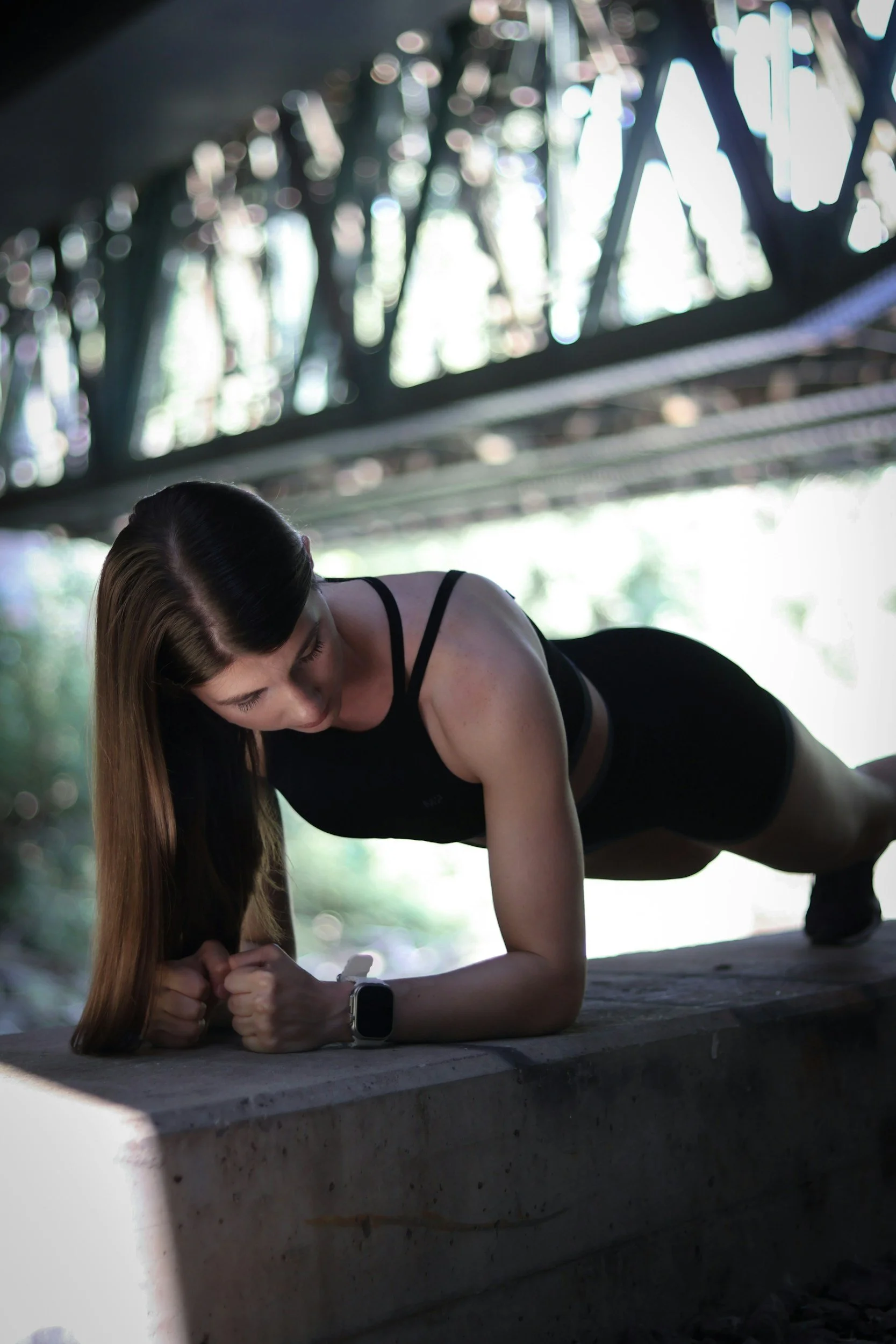
Plank
Trains: Resisting lower back arching, full-body stability
How:
Forearms and toes (or knees for easier)
Straight line from head to heels
Engage core to prevent hips sagging or piking
Breathe normally
Hold 20-60 seconds
Easier: From knees → Harder: Add shoulder taps or leg lifts
Watch for: Hips sagging, hips too high, holding breath
Dead Bug
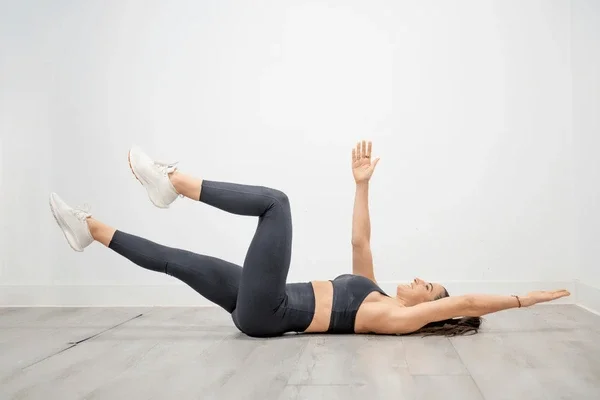
Trains: Maintaining neutral spine while moving limbs, coordination
How:
Lie on back, arms toward ceiling, knees bent 90 degrees
Press lower back into the floor
Slowly extend right arm overhead and left leg straight
Return to start, repeat on the opposite side
Alternate 10-12 reps per side
Why it works: Challenges core to maintain stability while limbs move, mimicking real coordination demands
Watch for lower back arching and moving too fast
Bird Dog
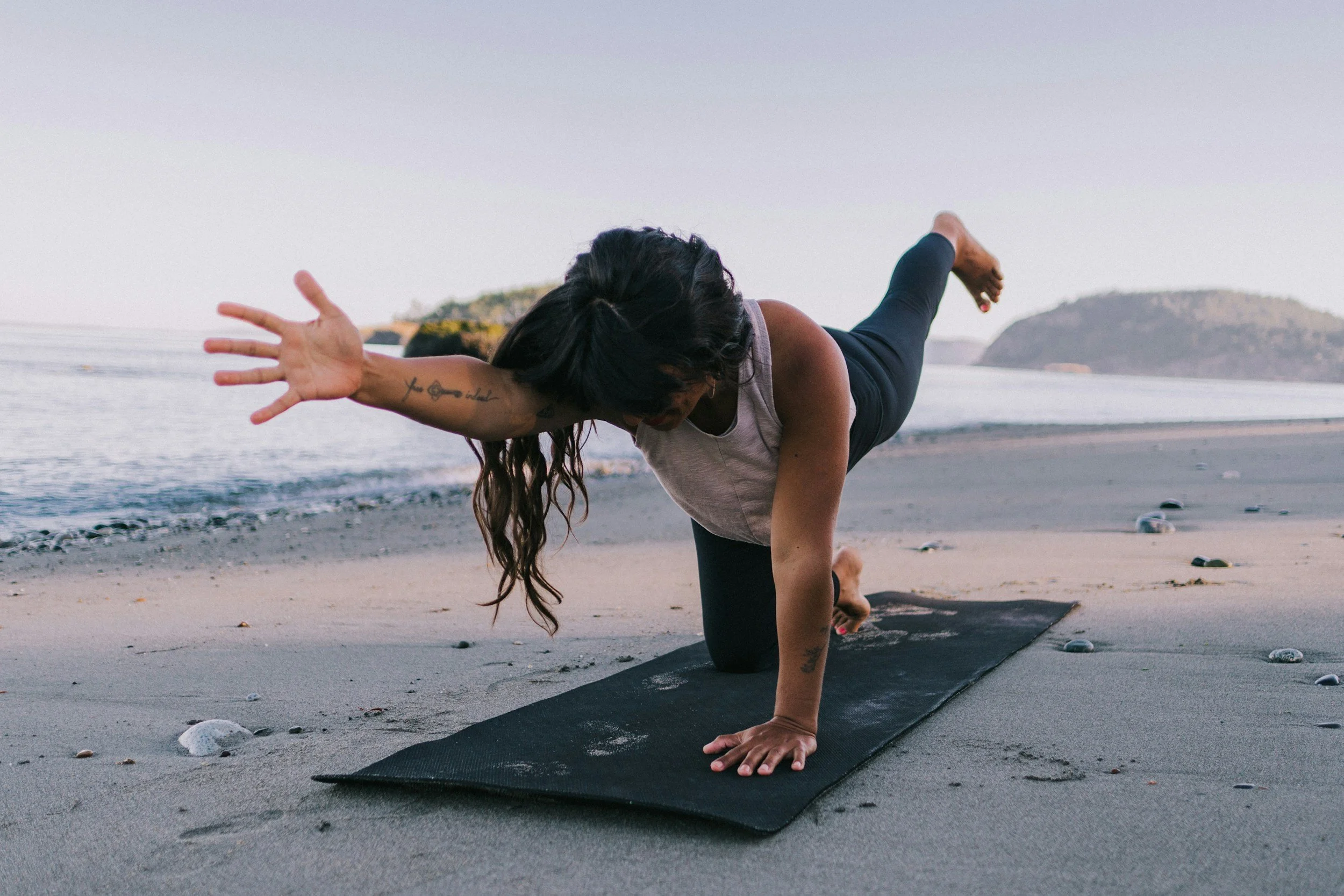
Trains: Anti-rotation, balance, spinal stability
How:
Start on hands and knees
Extend right arm forward and left leg back simultaneously
Keep hips level and watch for twisting
Hold 3-5 seconds
Return and repeat on the opposite side
8-10 reps per side
Why it works: Trains stability in positions you actually use (getting up from floor, playing with kids or animals)
Watch for: Hips rotating, lower back sagging
Pallof Press
Trains: Resisting rotation
How:
Attach resistance band to stable object at chest height
Stand sideways to anchor, holding band at chest
Press hands straight forward
Resist pull trying to rotate you
Hold 2-3 seconds, return
10-12 reps per side
Why it works: Directly trains anti-rotation, crucial for spine protection
Easier: Stand closer (less resistance) Harder: Stand farther away
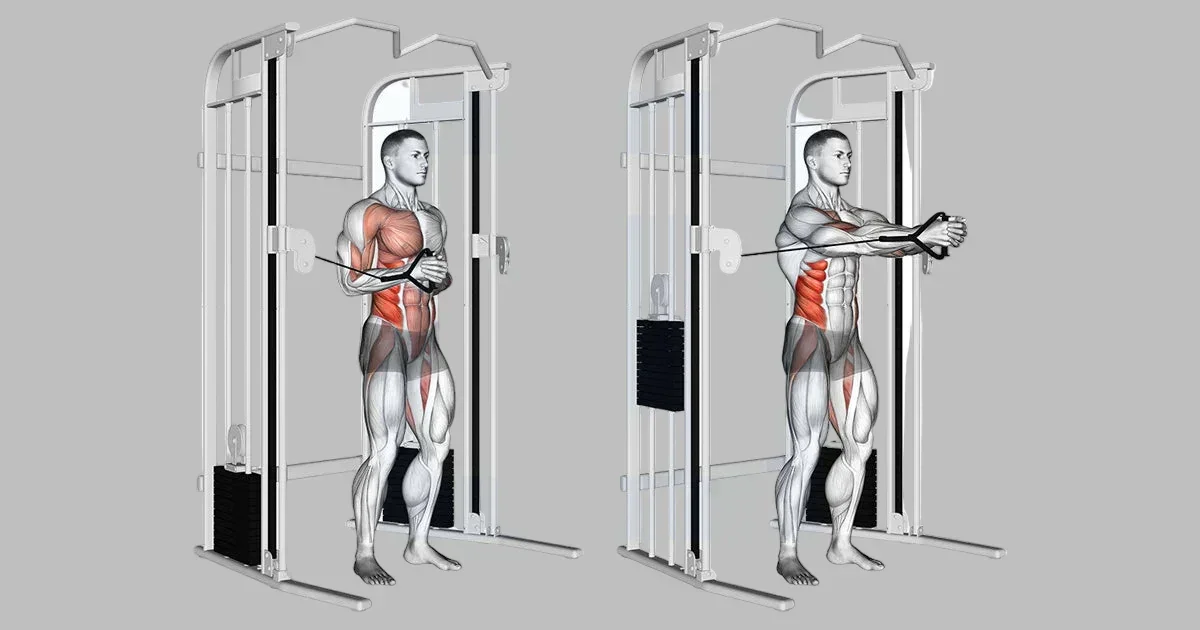
Image taken from the Training Station blog.
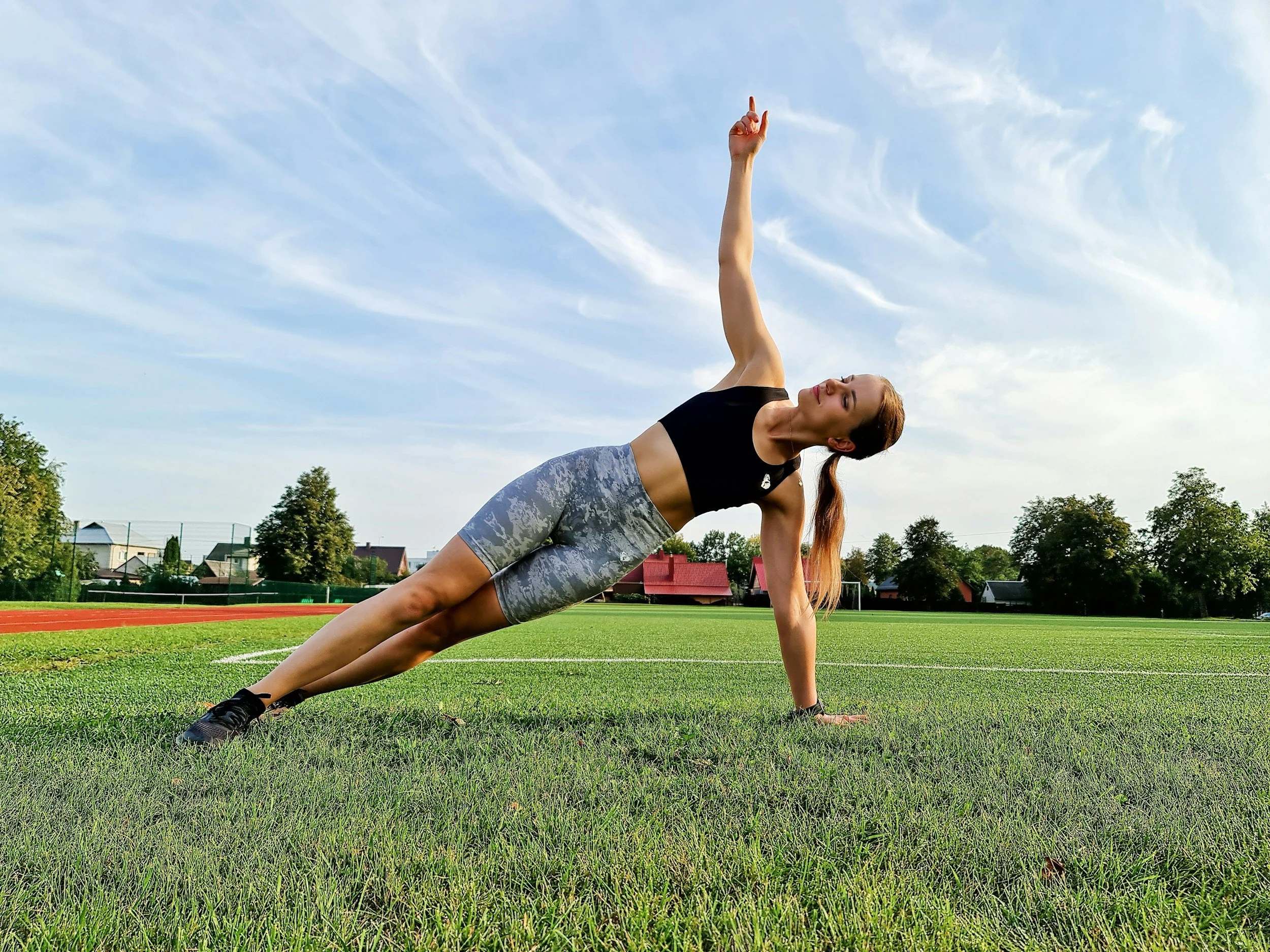
Side Plank
Trains: Obliques, resisting side-bending
How:
Lie on side, prop on forearm
Lift hips, creating straight line head to feet
Keep hips stacked
Hold 20-45 seconds per side
Easier: Bottom knee down Harder: Add hip dips or leg lifts
Watch for: Hips sagging, rolling forward, or rolling back
Farmer's Carry
Trains: Anti-lateral flexion, grip, full-body stability under load
How:
Hold weight in one hand
Stand tall, shoulders back
Walk 30-60 seconds
Resist pulling that tries to lean you toward weighted side
Keep torso upright
Switch hands, repeat
Why it works: Functional. You carry things in daily life, after all.
Watch for: Leaning toward weighted side, shrugging shoulder

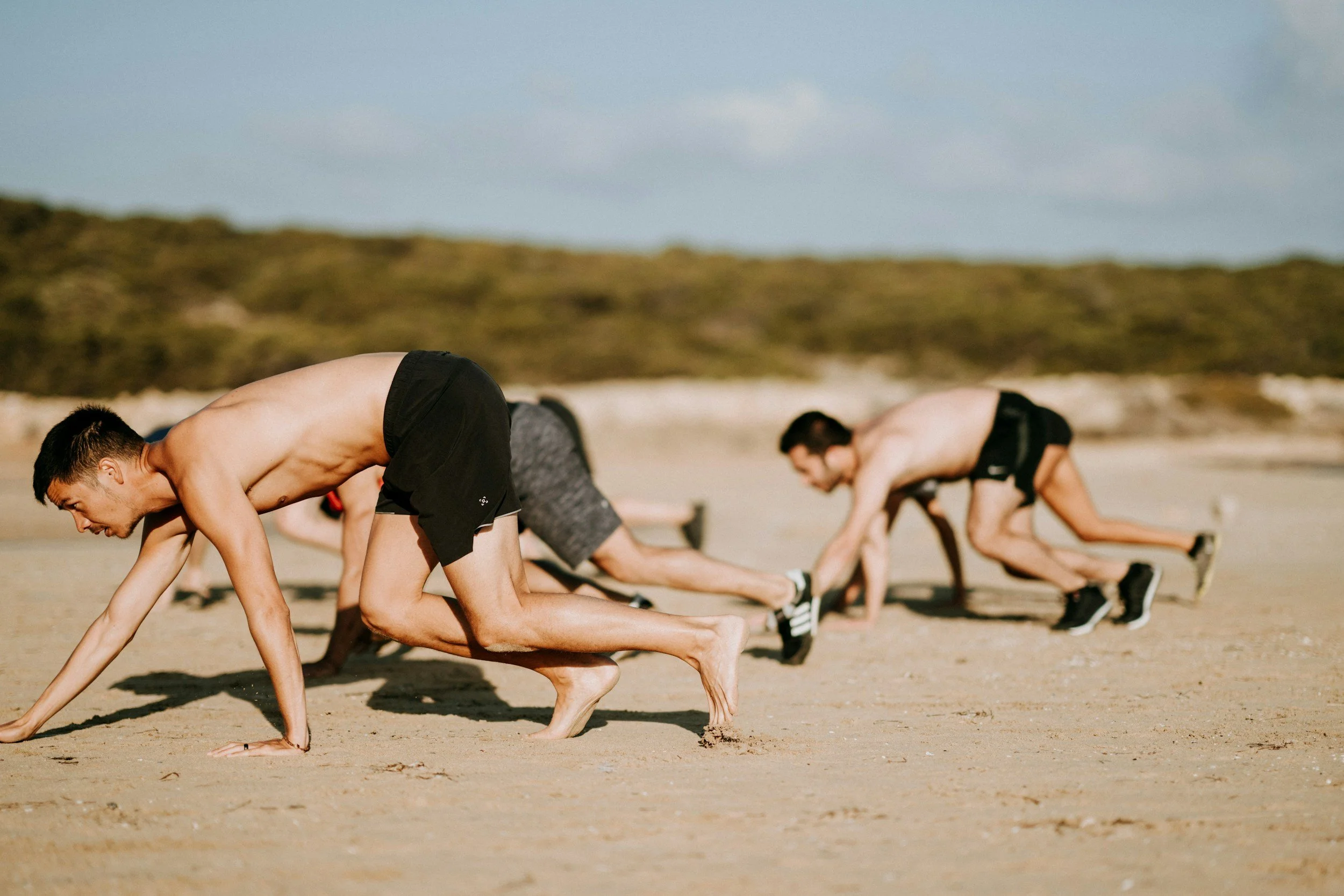
Mountain Climbers
Trains: Dynamic stability, cardio
How:
Start in high plank
Drive one knee toward the chest
Quickly switch legs
Continue 20-30 seconds
Why it works: Trains stability during dynamic movement
Easier: Step feet forward instead of jumping Harder: Increase speed
Watch for: Hips bouncing, losing plank position
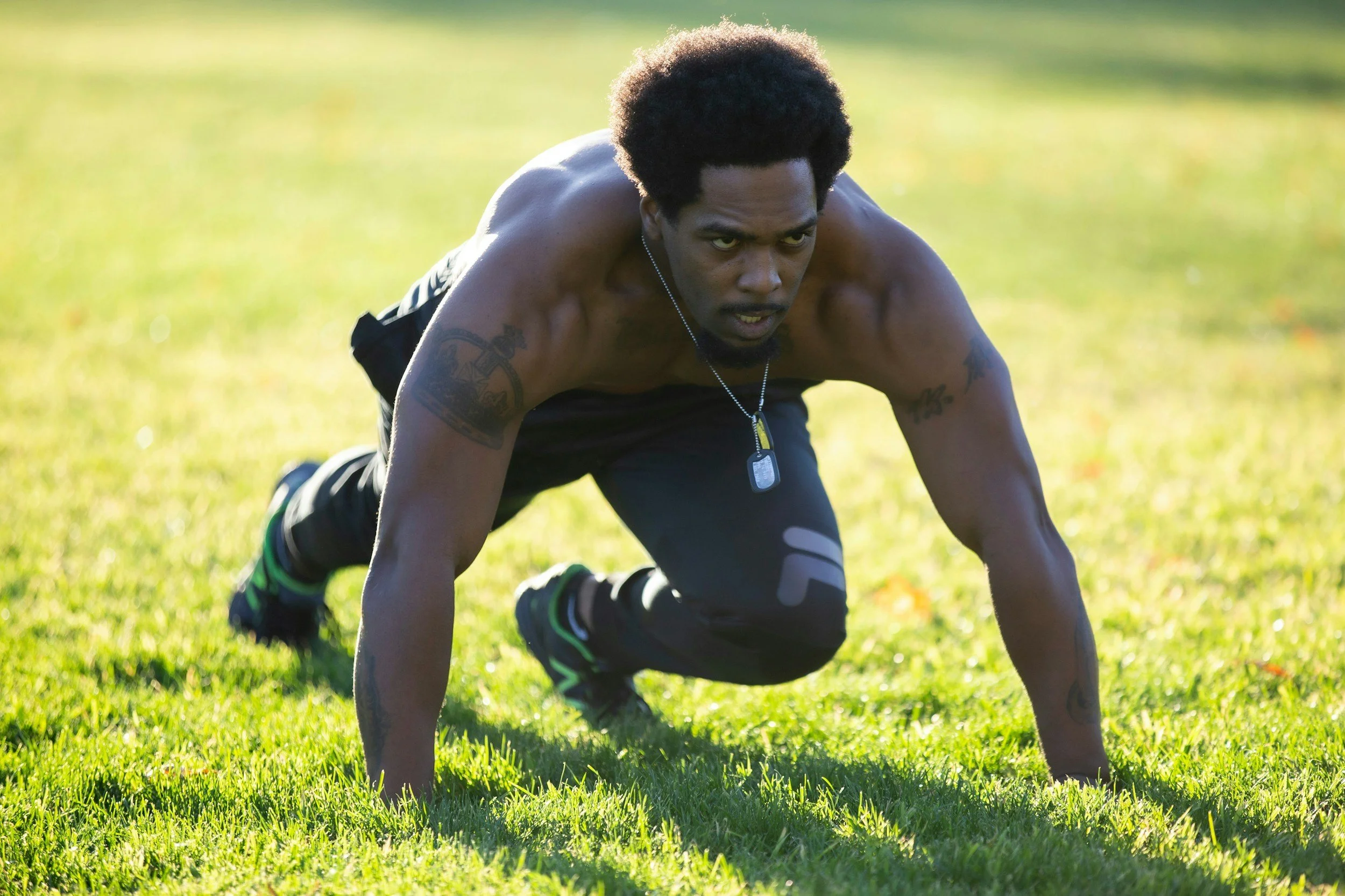
Bear Crawl
Trains: Full-body stability, coordination
How:
Start on hands and knees
Lift knees 1-2 inches off the ground
Crawl forward, opposite hand and foot together
Keep back flat and hips level
10-15 feet forward, then backward
Why it works: Multi-directional movement requiring constant core stabilization
Easier: Keep knees down. It’s already a pretty intense exercise so no harder version here.
Watch for: Hips swaying, moving too fast
Building Your Core Routine
You don't need all these exercises. Choose 3-4 and create a routine.
Sample Routine 1 (Beginner)
Plank (from knees): 3 sets, 20-30 seconds
Dead bug: 3 sets, 10 reps per side
Bird dog: 3 sets, 8 reps per side
Side plank (knees bent): 2 sets, 15-20 seconds per side
Time: 10-15 minutes
Sample Routine 2 (Intermediate)
Plank: 3 sets, 30-45 seconds
Pallof press: 3 sets, 12 reps per side
Mountain climbers: 3 sets, 30 seconds
Farmer's carry: 3 sets, 45 seconds per side
Time: 15-20 minutes
Sample Routine 3 (Variety)
Dead bug: 3 sets, 10 reps per side
Bird dog: 3 sets, 10 reps per side
Side plank: 3 sets, 30 seconds per side
Bear crawl: 3 sets, 20 feet forward/back
Time: 12-18 minutes
Training Frequency
2-3 times weekly is sufficient.
Your core works during almost every exercise (squats, deadlifts, push-ups, rows), so it gets indirect work frequently. Dedicated core training 2-3x weekly provides additional targeted stimulus without overtraining.
How to Progress
Once exercises feel easy:
Increase hold time: 30 seconds → 45 seconds → 60 seconds
Add reps: 10 → 12 → 15
Increase difficulty: Knee plank → full plank → plank with shoulder taps
Add resistance: Bodyweight → light weight → heavier weight
Progress gradually—small increases build significant strength over time.
When Crunches Might Still Make Sense
Despite everything above, crunches aren't useless.
Include crunches if:
You specifically want to train spinal flexion
You're doing comprehensive core work and want to add flexion
You enjoy them and they don't cause issues
The point isn't that crunches are bad. It's that they're not the only option and often not the best option for functional core strength.
The Bottom Line
Your core does more than flex forward. It stabilizes, resists unwanted movement, transfers force, and protects your spine.
Training only crunches develops limited function.
These exercises above train your core more completely and functionally.
Choose 3-4 exercises, do them 2-3 times weekly, progress gradually, and build genuine core strength that transfers to real life.
No crunches required.
