Beginner Guide to Dumbbells
You see dumbbells everywhere, whether it be in gyms, online, or in workout videos. They look simple enough: weights with handles. What could be so hard? But then the questions start.
Which weight do you need? How many? What's the difference between all the types? How do you use them without looking lost or hurting yourself? And honestly, why bother when bodyweight exercises exist?
This guide answers those questions without assuming your previous knowledge about dumbbells.
What Dumbbells Are (And Why They Matter)
A dumbbell is a short bar with weights on each end that you hold in one hand. Unlike a barbell, each dumbbell works independently.
That independence matters. When using dumbbells, each side of your body works separately. Your stronger side can't compensate for your weaker side. This exposes and eventually corrects strength imbalances.
Why add dumbbells when bodyweight works?
You can build significant strength with bodyweight alone. But dumbbells offer advantages:
Easier progression: With bodyweight, increasing difficulty often means learning entirely new, harder variations. With dumbbells, you just grab heavier weights.
More exercise options: Some movement patterns (certain shoulder, bicep, and back exercises) are difficult to replicate with bodyweight alone.
Faster strength building: Research in Applied Physiology, Nutrition, and Metabolism found that beginners using external resistance built strength faster than bodyweight-only training, though both groups improved (Gentil et al., 2017).
Versatility: One pair of dumbbells works for dozens of exercises targeting different muscles.
Types of Dumbbells (Simplified)
Walk into any store and you'll see multiple options. Here's what matters.
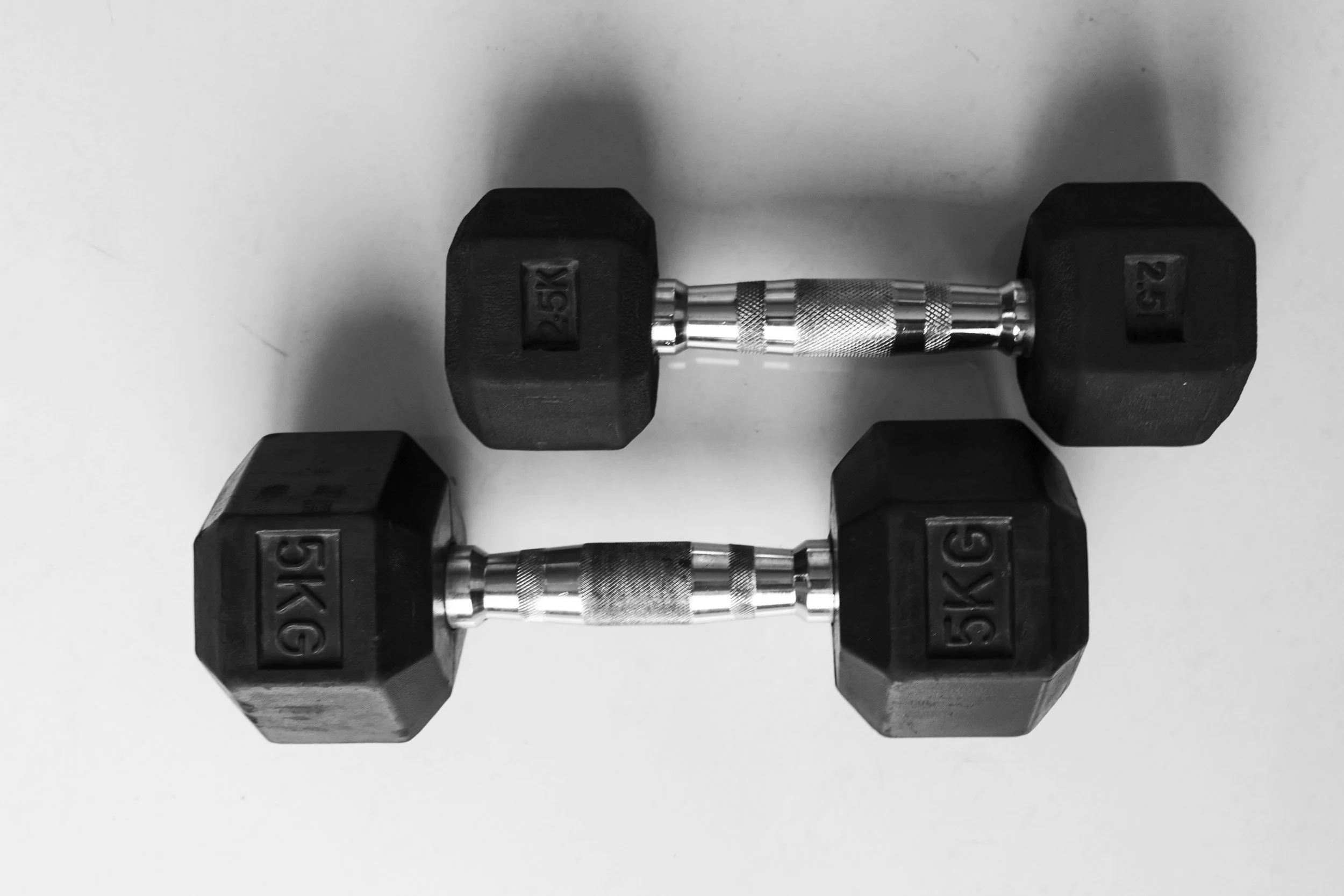
Fixed-Weight Dumbbells
Single solid pieces. A 10-pound dumbbell stays 10 pounds forever.
Advantages: Durable, comfortable, grab-and-go convenience
Disadvantages: Expensive if buying multiple pairs, requires storage space
Best for: Gyms, people with a dedicated workout space and budget for several pairs
Adjustable Dumbbells
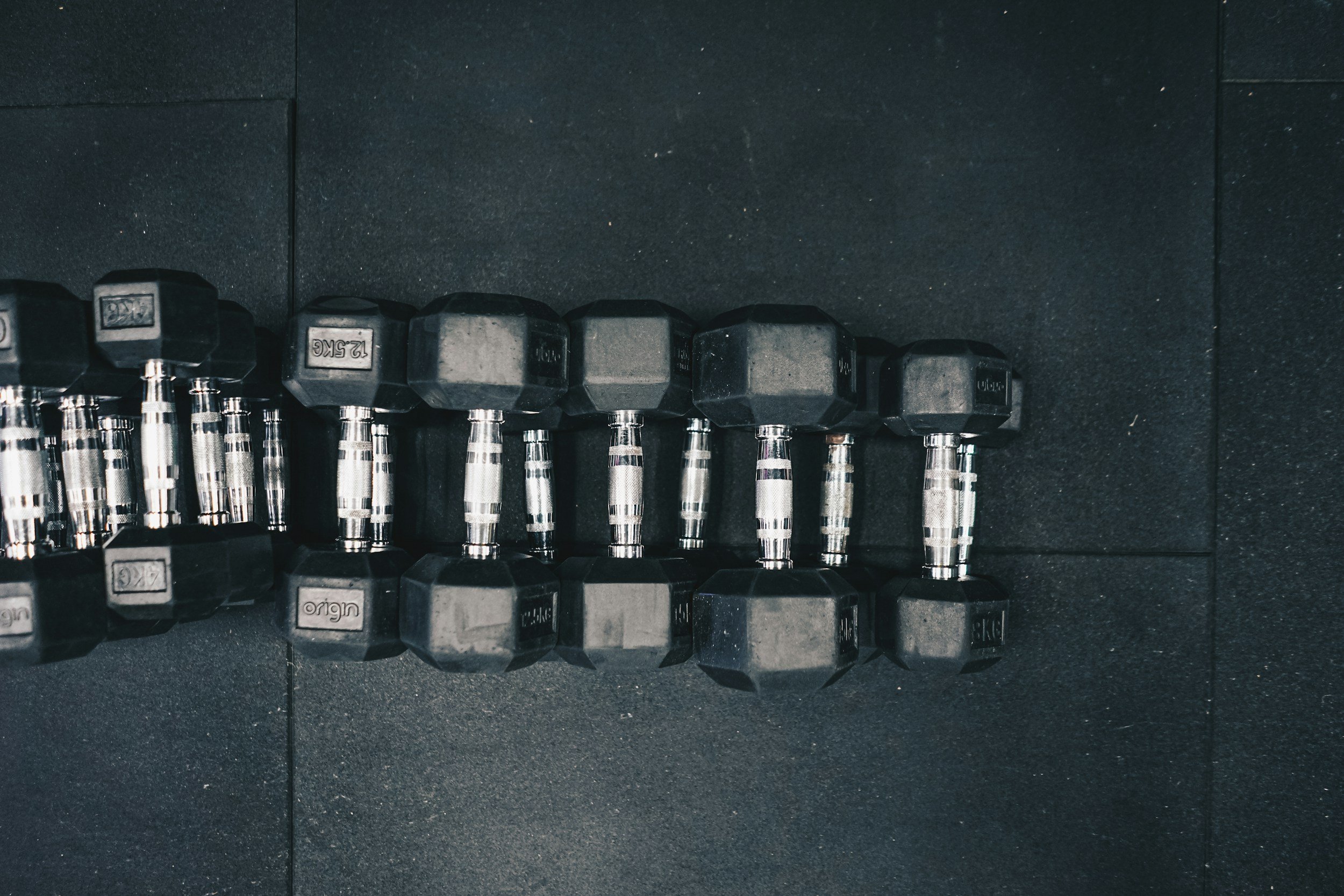
Change the weight on one dumbbell by adding/removing plates or using a dial mechanism.
Traditional plate-loaded: Mini barbells where you slide plates on and secure with clips.
Cheapest adjustable option ($50-100)
Slower weight changes
Can feel awkward with large plates
Dial/selector systems: Turn a dial or move a pin to select weight.
Fast weight changes (seconds)
Compact (one set replaces 15+ pairs)
Expensive ($300-400)
Plastic parts can break
Best for: Home gyms with limited space, people wanting multiple weight options without buying dozens of dumbbells
Light Coated Dumbbells
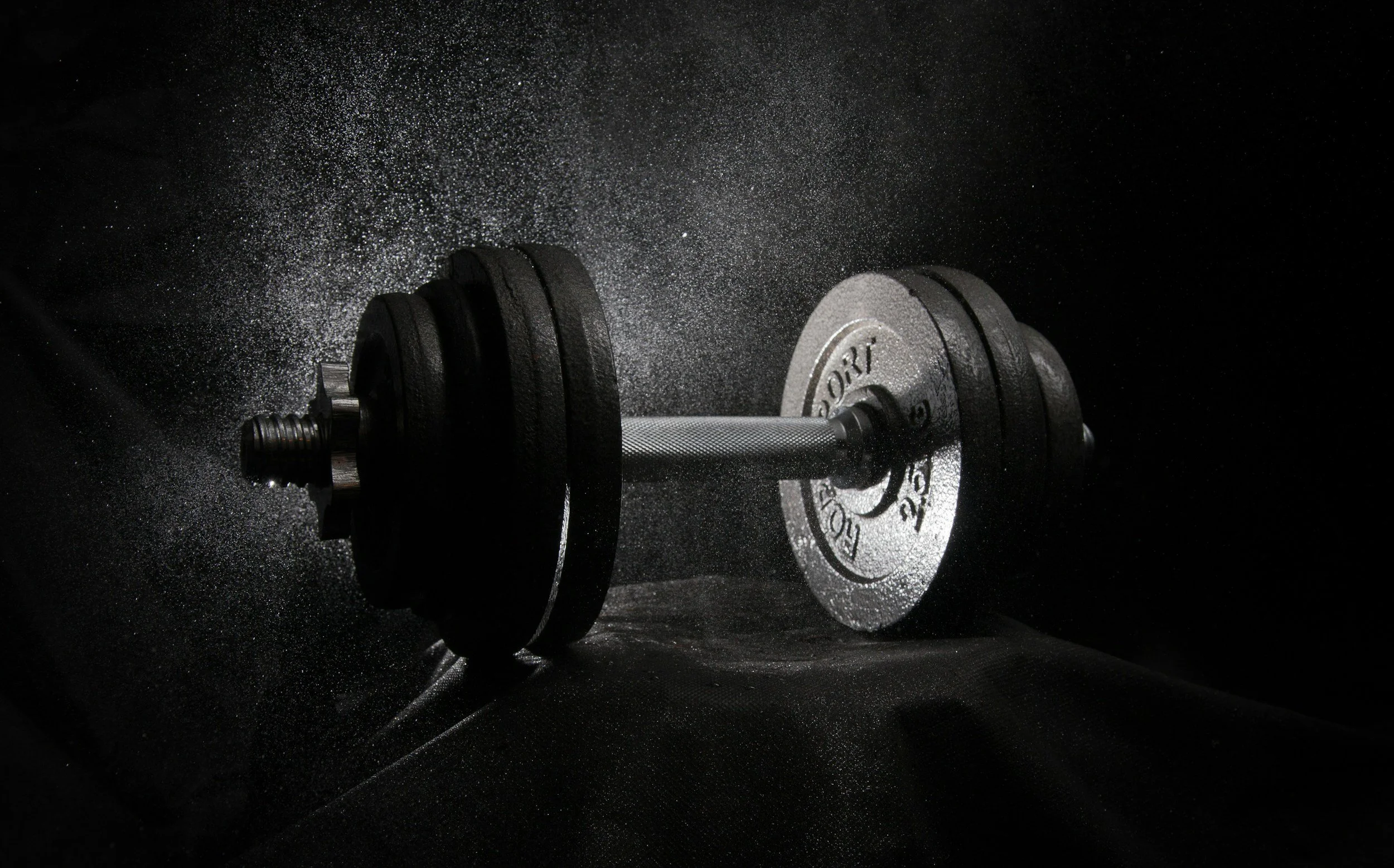
Fixed lighter weights (1-15 pounds) covered in neoprene or vinyl, usually color-coded.
Best for: Very basic home workouts, rehabilitation, people focusing on light resistance
Bottom line: If you have space and budget, buy fixed-weight pairs. If space is limited or budget is tight, buy one adjustable set.
What Weight Should You Actually Start With?
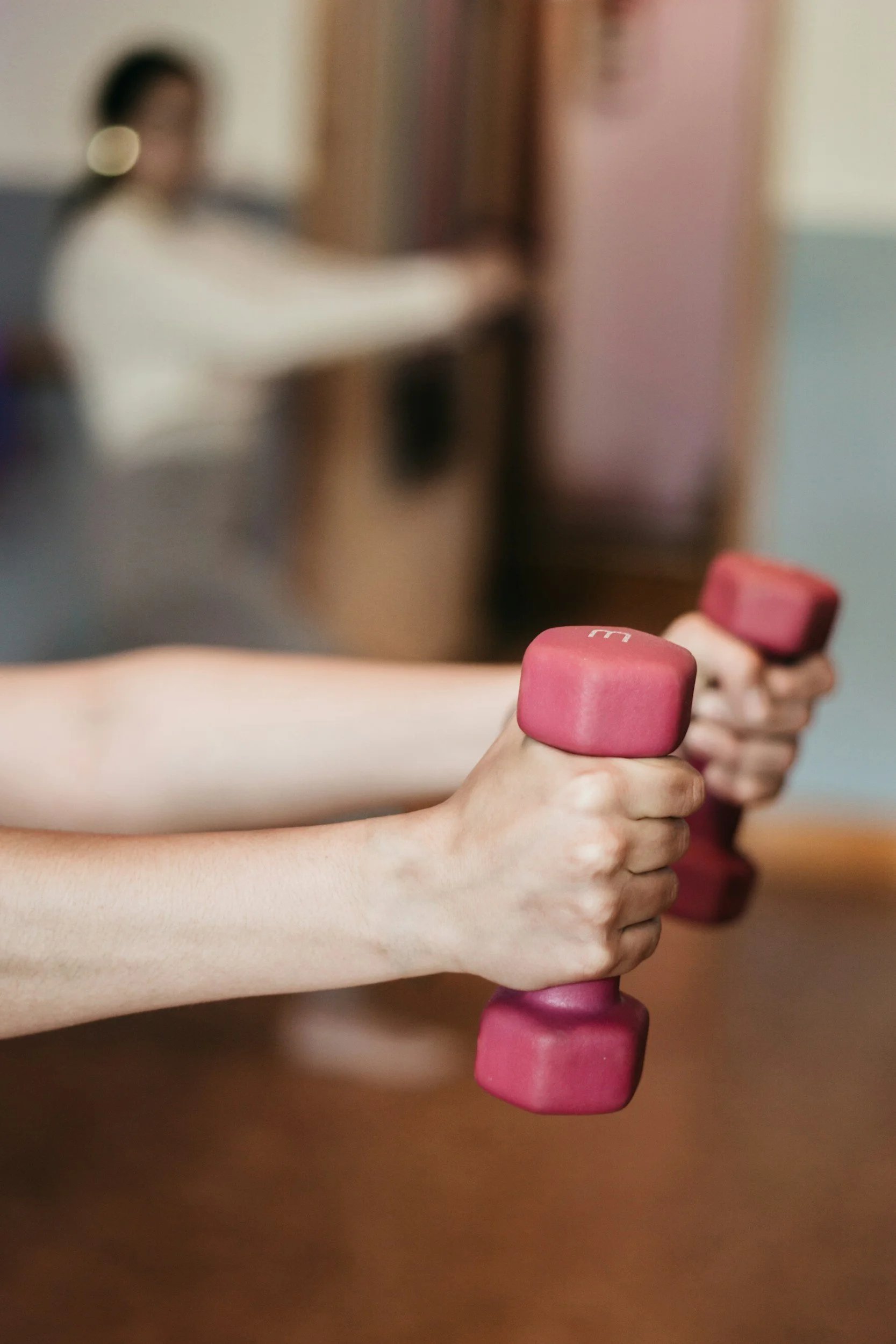
This question stops most people from buying dumbbells. Here's honest guidance:
If you've never lifted weights and haven't been active:
Women: 5-8 pounds
Men: 10-15 pounds
If you're somewhat active (walk regularly, do bodyweight exercises):
Women: 8-12 pounds
Men: 15-20 pounds
If you're quite active or have previous experience:
Women: 12-15 pounds
Men: 20-25 pounds
These are starting points for learning exercises. Within weeks, you'll likely need heavier for some exercises and lighter for others.
Reality check: Different exercises require different weights. You might use 20 pounds for squats but only 8 pounds for shoulder raises. This is completely normal.
Best beginner approach:
Fixed weights: Buy 2-3 pairs spanning light to moderate (example: 8, 12, 15 pounds)
Adjustable: Get a set adjusting from 5-25 pounds minimum
How Many Dumbbells Do You Need?
Minimum: One pair (two dumbbells matching weight).
Most exercises use both simultaneously. These could be rows, presses, squats, lunges, or curls.
Ideal for beginners: 2-3 pairs of different weights, or one adjustable set.
Why multiple weights? The perfect weight for bicep curls can feel too light for goblet squats. Right weight for shoulder presses might be too heavy for lateral raises.
If budget is tight: Start with one moderate-weight pair. You can progress significantly with single weight by adjusting sets, reps, and tempo before needing additional weights.
Six Essential Exercises
These fundamental movements cover all major muscle groups and teach you how to handle dumbbells safely.
Goblet Squat (Legs, Core)
Hold one dumbbell vertically with both hands at chest height (like holding a goblet). Stand feet slightly wider than hips. Keep chest up, bend knees and hips to lower like sitting in a chair. Lower until thighs parallel to ground or as low as comfortable. Push through heels to stand.
Start: 2-3 sets of 8-12 reps
Dumbbell Row (Back, Biceps)
Place left hand and left knee on bench or sturdy chair. Right foot on ground. Hold dumbbell in right hand, arm hanging straight. Keep back flat. Pull dumbbell toward ribcage, elbow close to body. Lower with control. Complete all reps and switch sides.
Start: 2-3 sets of 8-12 reps per side
Dumbbell Shoulder Press (Shoulders, Triceps)
Sit with back support. Hold dumbbells at shoulder height, palms forward. Press straight overhead until arms are fully extended. Lower to shoulder height. Don't arch your back.
Start: 2-3 sets of 8-12 reps
Dumbbell Chest Press (Chest, Shoulders, Triceps)
Lie on a bench or the floor. Hold dumbbells above chest, arms extended. Lower toward your chest by bending your elbows (elbows at a 45-degree angle from your body). Press back up.
Start: 2-3 sets of 8-12 reps
Romanian Deadlift (Hamstrings, Glutes)
Stand holding dumbbells in front of thighs, palms facing body. Keep knees slightly bent. Hinge at the hips, pushing them backward. Lower the dumbbells down the front of your legs, keeping them close. Feel a stretch in the hamstrings. Return to standing by driving your hips forward. Keep back flat.
Start: 2-3 sets of 8-12 reps
Bicep Curl (Biceps)
Stand holding dumbbells at sides, palms forward. Keep your upper arms stationary. Curl toward your shoulders by bending your elbows. Lower with control. Don't swing or use momentum.
Start: 2-3 sets of 10-15 reps
Safety Essentials
Set Dumbbells Down Deliberately
Never drop them. This damages floors and equipment and can injure you or others. If you can't complete another rep, lower to your lap first, then set it/them on the ground. If you are strong enough to pick them up, you are strong enough to place them down.
Check Equipment First
With adjustable dumbbells, verify collars are tight and plates are secure before lifting. Loose plates sliding off mid-exercise can cause injuries.
Start Lighter Than You Think
Your ego wants heavier weights. Your joints need adaptation time. Start lighter for the first 2-3 workouts while learning movements.
Keep Wrists Neutral
The wrist should align with the forearm, not be bent backward or forward excessively. Bent wrists under load cause pain and injury.
Breathe
Exhale during the challenging part (pushing up, pulling up). Inhale during the easier part (lowering). Don't hold your breath.
How to Progress
Once exercises feel easy, progress. Here's how.
Add Weight
Most straightforward: use heavier dumbbells.
Increase by 2.5-5 pounds when you complete all sets and reps with excellent form for two consecutive workouts.
Add Reps
If you don't have heavier dumbbells, add repetitions.
Progress from 3 sets of 10 to 3 sets of 12, then 3 sets of 15, before increasing weight.
Slow Down Tempo
Make exercises harder by slowing the lowering phase.
Take 3 seconds to lower instead of 1 second. Increases time under tension without heavier weights.
Important: Progress one variable at a time. Do not increase weight, reps, and sets at the same time.
Common Mistakes
Using Momentum
Swinging dumbbells or using your whole body to heave weights makes exercises less effective and increases injury risk.
Fix: Use lighter weights. If you can't lift with controlled movement, it's too heavy.
Holding Breath
Holding breath during reps spikes blood pressure and can cause dizziness.
Fix: Consciously breathe throughout. Exhale during exertion, inhale during the easier phase.
Progressing Too Fast
Jumping from 10 to 20 pounds after one week often leads to form breakdown or injury.
Fix: Progress in smaller increments (2.5-5 pounds). Provide your body adaptation time.
Sacrificing Form for Heavier Weights
Using weights too heavy to lift with improper form is counterproductive.
Fix: Check your form regularly. If it's breaking down, reduce the weight.
Your First Dumbbell Routine
Simple full-body routine using just dumbbells, perfect for beginners training 2-3 times weekly.
Workout A:
Goblet squats: 3 sets of 10-12
Dumbbell rows: 3 sets of 8-10 per side
Chest press: 3 sets of 8-12
Shoulder press: 2 sets of 10-12
Plank: 2 sets of 30 seconds
Workout B:
Romanian deadlifts: 3 sets of 10-12
Dumbbell rows: 3 sets of 8-10 per side
Chest press: 3 sets of 8-12
Bicep curls: 2 sets of 10-12
Plank: 2 sets of 30 seconds
Schedule: Alternate workouts with at least one full rest day between sessions.
Progression: When you complete all sets and reps with good form for two consecutive workouts, increase weight by 2.5-5 pounds for that exercise.
What to Buy
Best for a tight budget: Buy 2-3 pairs of basic fixed dumbbells at different weights
Example: 5 lb, 10 lb, 15 lb pairs
Cost: ~$60-80 total
Where: Amazon, Walmart, Dick's Sporting Goods
Best for home gyms: Bowflex SelectTech adjustable dumbbells
Adjusts 5-52.5 lbs per dumbbell
Replaces 15 pairs
Cost: ~$300-400
Fast weight changes
Best budget adjustable: CAP Barbell plate-loaded adjustable dumbbells
Cost: ~$50-150, depending on weight range
Slower weight changes but durable
Can buy additional plates later
Money-saving tip: Check Facebook Marketplace or Craigslist. Dumbbells last forever. Used dumbbells at 50% off retail are identical to new ones.
When You Outgrow Starting Dumbbells
Eventually, starting dumbbells feels light. Options:
Buy heavier: If you started with 10 pounds, add 15-pound and 20-pound pairs.
Increase volume: More sets and reps with current weights build muscular endurance.
Slow tempo: Take 3-5 seconds to lower instead of 1 second.
Try harder variations: single-leg squats instead of regular squats.
Join a gym: Eventually, home dumbbells max out. Gyms have dumbbells up to 100+ pounds plus other equipment.
Most beginners won't outgrow a good adjustable set (5-50 pounds) for 6-12 months. That's plenty of time to decide whether to get heavier equipment or a gym membership.
The Bottom Line
Dumbbells aren't complicated. They're weights with handles. Remarkably effective weights with handles.
You don't need a complete home gym or dozens of pairs. You need 1-3 pairs (or one adjustable set) appropriate for your current strength, knowledge of basic exercises, and consistent effort over weeks.
Start lighter than your ego wants. Learn proper form. Progress gradually. Rest adequately.
The specific dumbbells you buy matter less than actually using them consistently. The best dumbbells are the ones you'll pick up three times weekly, not the ones collecting dust because they seemed like a great idea.
