Beginner-Friendly Alternatives to Popular Exercises
It is a tale as old as time. The YouTube video that you are following has an instructor who looks like they have been doing sit-ups for the last 20 years and is encouraging you to follow along. You try it. It's too hard, hurts in the wrong way, or requires strength you don't have yet.
So you stop, feeling like you failed.
But almost every exercise has a beginner-friendly alternative that works the same muscles without requiring advanced strength, mobility, or coordination.
Why You Need Alternatives
Standard exercise versions assume baseline strength, mobility, and coordination that many beginners don't have.
Alternatives let you:
Keep training those muscles instead of skipping
Build strength from your actual starting point
Prevent injury from forcing movements you're not ready for
Progress gradually toward standard versions
Alternatives aren't “easier versions for people who can't do real exercise.” They're strategic progressions. In fact, many alternatives remove barriers for those who find it difficult to practice fitness.
Push-Up Alternatives
Standard push-ups require significant upper-body and core strength.
Wall Push-Ups (Easiest)
Stand at arm's length from the wall. Put your hands on the wall at shoulder height. Lean in, bend elbows, and push back.
Almost everyone can do these. It builds movement patterns with minimal strength requirements.
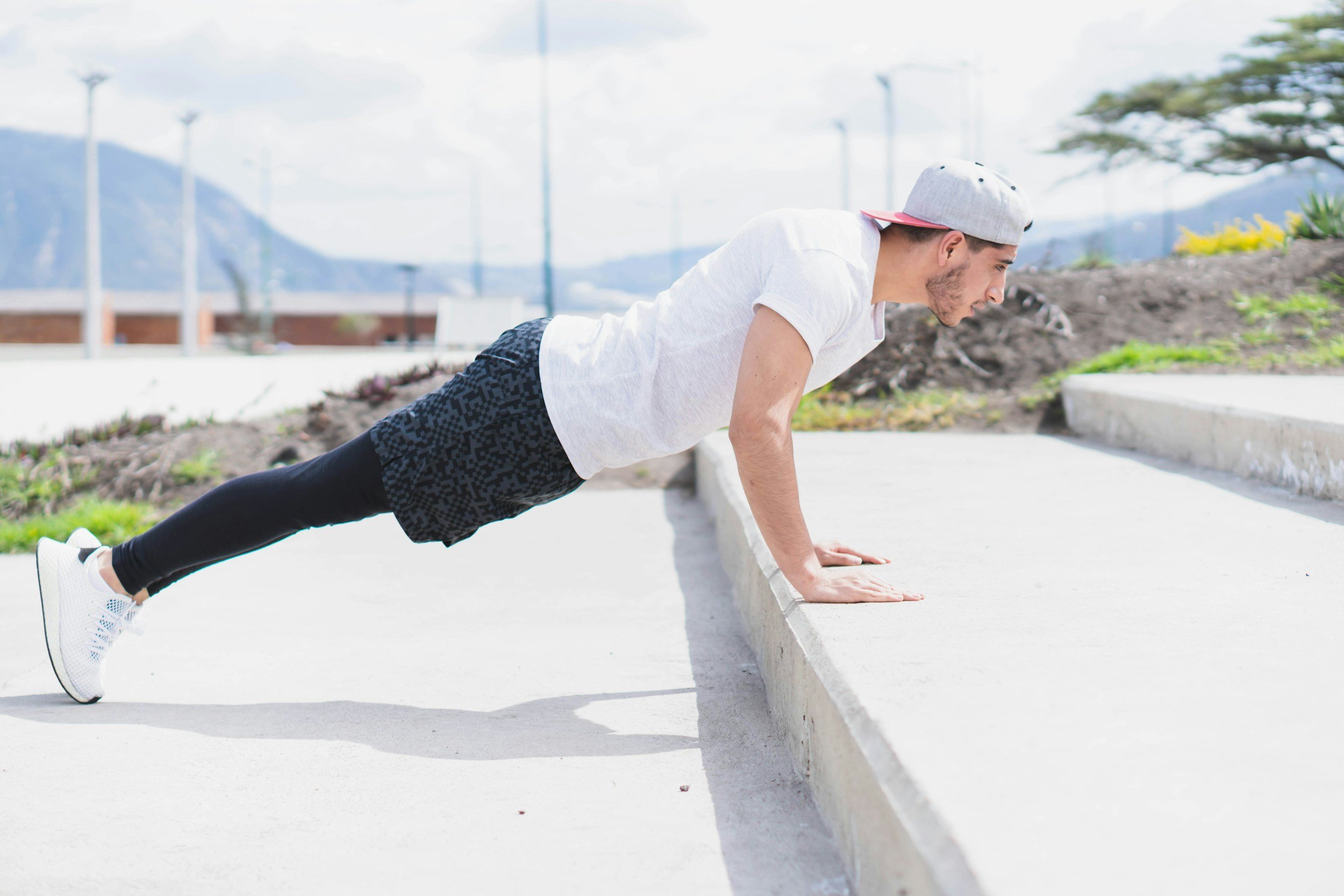
Incline Push-Ups
Hands on an elevated surface (counter, table, or bench). Body straight. Lower chest toward the surface, push back up.
Higher surface = easier. Gradually lower the surface as you strengthen: counter → table → bench → step → floor.
Knee Push-Ups
On the floor with hands and knees (not toes). Lower chest to the floor and push back up.
Reduces the weight you're pushing. Bridge between incline and full push-ups.
Eccentric Push-Ups
Start at the top of the push-up position. Lower down slowly. Drop to your knees to push back up.
You're stronger lowering than lifting. Builds strength for full push-ups.
Squat Alternatives
Standard squats require hip and ankle mobility and leg strength.
Sit-to-Stand (Easiest)
Sit in a chair. Stand up. Sit back down.
The chair provides target depth and catches you. Builds squat pattern and leg strength.
Progress: Sit slower. Hover without fully sitting. Eventually, remove the chair.
Box Squats
Stand in front of the bench. Squat until you lightly touch the bench, then stand.
Provides depth target without requiring full squat mobility.
Assisted Squats
Hold something stable (door frame, TRX straps, etc.). Squat while using arms for light balance support.
Removes balance challenge while building leg strength.
Partial Squats
Squat only as far as you can comfortably control, even if just a few inches.
Any depth works muscles. Depth increases with practice.
Plank Alternatives
Standard planks require core strength to hold position.
Elevated Plank (Easiest)
Forearms on the counter or bench instead of the floor. Body straight from head to feet.
Higher = easier. Lower the surface as core strengthens: counter → table → bench → floor.
Knee Plank
Forearms and knees on the floor. Straight line from head to knees (don't let hips sag or pike).
Shorter body position = less challenging.
Shortened Holds
Hold plank (any variation) for 10-15 seconds. Rest. Repeat multiple times.
Six 10-second holds = 60 seconds total, same as one 60-second hold but more achievable.
Lunge Alternatives
Lunges challenge balance and require mobility.
Split Squat (Easiest)
Start in a lunge position. Lower yourself down, raise up. Stay in position for all reps. Switch legs.
Removes the balance-challenging step. Focus on leg strength.
Progress: Once comfortable, add a stepping motion to create actual lunges.
Reverse Lunge
Step backward (not forward) into a lunge. Return to standing.
Stepping backward feels more stable for most people.
Assisted Lunge
Hold the wall or chair back for light balance support while lunging.
Removes balance challenge.
Step-Ups
Step up onto a low platform. Step down. Repeat.
Single-leg exercise, like lunges, but with different balance demands. Often easier.
Pull-Up Alternatives
Pull-ups require upper body strength that most beginners don't have.
Lat Pulldown Machine (Easiest)
Pull the bar down to your chest, control back up.
Same pulling motion, adjustable weight. Start very light.
Assisted Pull-Up Machine
The machine provides counterweight assistance, making pull-ups possible.
Lets you practice the actual pull-up motion while building strength.
Progress: Decrease assistance gradually.
Band-Assisted Pull-Ups
Loop the resistance band over the bar. Place knees or feet in the band for upward assistance.
Progress: Use a lighter band over time.
Inverted Rows
Set the bar at hip height. Hang underneath at an angle. Pull chest to bar.
Easier angle than pull-ups. Same muscles.
Progress: Lower the bar to increase difficulty.
How to Progress Through Alternatives
Start Where You Actually Are
Pick the alternative you can complete with a reasonable form for your target reps.
Don't pick the hardest to prove something. Pick what works for your current capability.
Move Up When Ready
Once an alternative feels easy (12-15 reps comfortably), try the next level.
Example: Push-up progression Wall → Counter → Table → Bench → Knee → Eccentric → Full
This might take months. That's normal.
Mix Alternatives Within Workouts
You don't have to use the same alternative every time.
Example:
Set 1: Floor push-ups (get 5)
Sets 2-3: Incline push-ups (complete remaining work)
Challenge yourself while ensuring completion.
The Bottom Line
You don't have to skip exercises you can't do yet.
Almost everything has beginner-friendly alternatives that:
Work the same muscles
Build strength from your starting point
Progress gradually toward standard versions
Are legitimate exercises, not just stepping stones
Use alternatives without shame. They're not “cheating.”
Start with what you can actually do. Build from there. Progress happens gradually over weeks and months, not overnight.
The alternative itself is real exercise. Use it until you're ready for the next level.
