You've been thinking about joining a gym or starting a fitness routine. You know exercise would help. You've got the membership, the clothes, maybe even a plan.
But you can't make yourself walk through those doors. I started looking into gym anxiety because there had to be a reason why I had to pep-talk myself in the parking lot to even walk through the door.
Just thinking about it created all sorts of crazy scenarios in my head. Your mind floods with images of everyone watching, judging, and thinking you don't belong. You imagine not knowing how to use equipment, doing exercises wrong, and looking ridiculous.
So you don't go. Or you go once, feel terrible, and never return. This feeling of wanting to leave has a name.
This is gym anxiety. And you're not alone.
This guide explains what gym anxiety actually is, why it happens, and why it's a real, valid response to a genuinely intimidating environment.
What Gym Anxiety Actually Is
Gym anxiety is a persistent fear, worry, or distress about exercising in public fitness spaces.
It's not just nervousness. Everyone feels some level of nervousness trying something new. Gym anxiety is more intense. It creates avoidance, physical symptoms, and genuine distress that stops you from exercising even when you want to.
What It Can Feel Like
In your body:
Racing heart before or during gym visits
Sweating, shaking, or trembling
Chest tightness or difficulty breathing
Nausea or stomach discomfort
Feeling dizzy
In your mind:
Overwhelming self-consciousness
Convinced everyone is watching and judging
Fear of doing something wrong or looking stupid
Dread is building before you even go
Replaying everything you think you did wrong afterward
Feeling like you don't belong
In your actions:
Avoiding the gym despite wanting to exercise
Only going during off-peak hours
Staying in one safe area and avoiding others
Leaving early or cutting workouts short
Not asking for help even when you need it
How It's Different from Regular Nervousness
Regular nervousness fades as you get familiar with something. Gym anxiety persists or even intensifies despite repeated exposure.
Why gyms specifically trigger anxiety:
Physical vulnerability (wearing less, body visible, sweating, out of breath)
Performance on display (people can watch and judge your capability)
Unfamiliar environment with unwritten rules
Equipment that's confusing or intimidating
Fitness culture emphasizing certain bodies and ability levels
Constant comparison to others who seem more fit or confident
Research shows exercise-related anxiety is common and distinct from other social anxiety, with specific triggers around body image and competence concerns (Hausenblas et al., 2004).
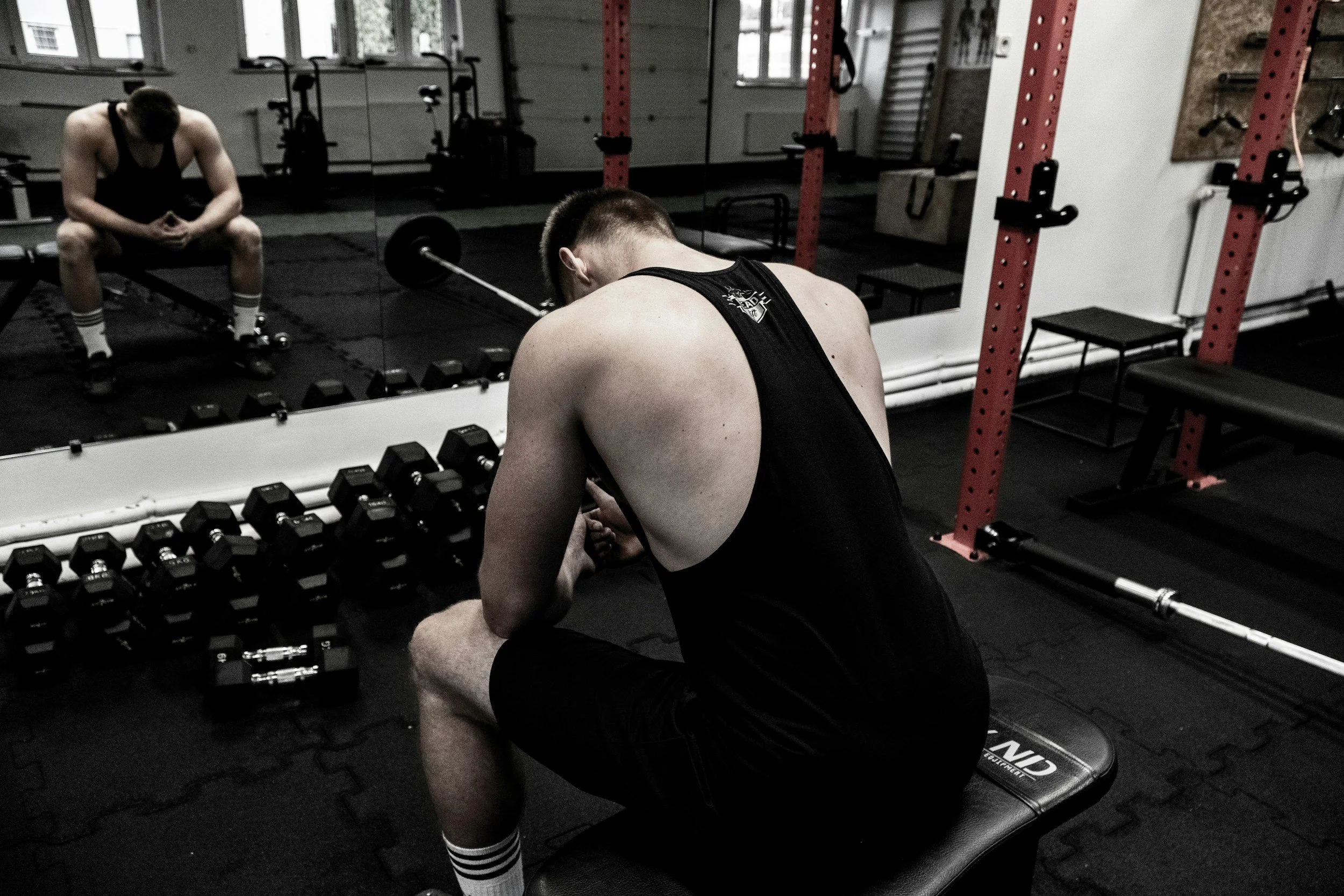
Who Gets Gym Anxiety
Short answer: Lots of people.
Gym anxiety isn't rare. It's not a sign you're weak or overly sensitive. It's common.
Beginners Experience It
People new to exercise or returning after a long break often feel it intensely.
You're unfamiliar with equipment, uncertain about form, have no established routine, feel self-conscious about fitness level, and fear injury from doing something wrong.
People in Larger Bodies Experience It
Weight stigma in fitness spaces is real and documented. People in larger bodies often face stares, comments, assumptions about their capabilities, and equipment not designed for their size. Not to mention, the age of social media has multiplied this level of stigma tenfold.
Women Experience It
Women report higher rates of gym anxiety, particularly related to body scrutiny, male-dominated areas like free weights, unwanted attention, and pressure about appearance.
Anyone Uncomfortable With Their Body Experiences It
Regardless of size, people uncomfortable with their bodies often feel gym anxiety because exercise clothing is form-fitting, mirrors are everywhere, movement draws attention, and comparison is constant.
People Who Were Bullied Experience It
Previous experiences with sports, PE class, or fitness settings in which a negative result occurred shape current experiences.
Being picked last for teams, humiliated during PE, teased about athletic ability, or shamed by doctors creates associations between physical activity and shame that persist into adulthood.
Perfectionists Experience It
People who set very high standards expect to know everything and be proficient with the movements. Making mistakes or looking incompetent feels intolerable, so they avoid situations where they won't immediately excel.
Why It Happens
Understanding why helps you recognize it's your brain responding to perceived threats.
Your Brain Detects Social Threat
Your brain evolved to detect situations where you might be rejected, judged, or excluded.
Gyms trigger this detection:
You're being observed (or feel like you are)
You're in unfamiliar territory
You're uncertain about "rules"
You're demonstrating competence publicly
Your anxiety is responding to a perceived social risk. Your brain literally sees the gym as one big “fight or flight” scenario.
You Overestimate How Much People Notice You
You feel like everyone is watching. Research shows people dramatically overestimate how much attention others pay to them (Gilovich et al., 2000).
Reality: Most people at the gym focus on their own workouts, dwell on their own insecurities, or just try to get through their session.
Your perception: Everyone is staring, judging your form, criticizing your body, thinking you don't belong.
You're Comparing Your Beginning to Their Middle
Gyms provide constant comparison opportunities. You see people lifting heavier, running faster, looking fitter, and moving confidently. The walls are exclusively mirrored, where everyone can see everything.
Your brain interprets this as evidence that you're inadequate.
The problem: You're comparing your beginning to their middle or end. You're seeing their current capability without knowing their starting point.
Unfamiliarity Creates Stress
Gyms are full of uncertainty if you're new:
Which equipment does what?
How do you use each machine?
What are the unwritten rules?
Is someone using that, or are they done?
Each small uncertainty requires mental energy. Accumulated uncertainties create background stress.
Past Experiences Shape Current Reactions
If you've had negative experiences in fitness settings, whether that is being stared at, receiving unwanted comments, feeling judged, experiencing discrimination, your brain remembers that event and attempts to protect you from harm again.
Now, similar environments trigger this protective response that says, “This place isn't safe.”
You've Absorbed Fitness Culture Messages
Fitness culture sends messages about who belongs in gyms and what “fit” looks like.
If you've internalized these and you believe the following:
You need to be in shape to deserve to be there
Your body is wrong or shameful
You should know what you're doing already
Taking up space or needing help is burdensome
These beliefs create anxiety before you even walk in.
What Gym Anxiety Isn't
It's Not Weakness
Experiencing anxiety doesn't mean you're weak or broken. Many people with gym anxiety are strong in other life areas. Anxiety in one context doesn't define your overall capability in another.
It's Not Rare
You're not the only person feeling this way. Significant percentages of people, particularly those that we mentioned earlier, experience exercise-related anxiety.
The fact that it's not discussed openly doesn't mean it's uncommon. It means people feel ashamed to admit it.
It's Not Permanent
Gym anxiety can improve. With strategies, exposure, support, and sometimes professional help, many people reduce it to manageable levels or overcome it.
It's Not “Just in Your Head”
The physical symptoms are real. The threats triggering anxiety (judgment, stigma, harassment) are often real. The impact on your life is real.
The Real Impact
Gym anxiety has consequences beyond discomfort.
You Avoid Exercise
The most direct impact: you avoid exercise entirely or limit yourself to private home exercise.
This means missing benefits: physical health improvements, mental health benefits, social connection, and a sense of capability.
Avoidance Gets Reinforced
Avoiding the gym reduces anxiety temporarily (you feel relief), which reinforces the behavior.
The pattern: Fear gym → Avoid gym → Feel relief → Brain learns “avoiding reduces threat” → Fear strengthens → Continue avoiding
Breaking this requires experiencing anxiety without avoiding, which feels counterintuitive.
You Feel Ashamed
Many people feel ashamed about having gym anxiety, creating additional distress:
“I should just go like normal people”
“Why am I so weak that this bothers me?”
“Everyone else can do this, what's wrong with me?”
This shame adds another layer on top of the original anxiety.
Moving Forward
Gym anxiety is real, common, and understandable.
It's your brain responding to an environment with genuine anxiety triggers: social evaluation, unfamiliarity, comparison, physical vulnerability, and sometimes actual stigma.
Experiencing it doesn't mean you're weak, alone, or incapable of ever exercising. It means you're having a human response to a legitimately intimidating situation.
What this understanding enables:
Recognizing what gym anxiety is represents the first step. Next steps include:
Strategies for managing anxiety
Ways to start exercising despite it
Finding environments that feel safer
Building confidence gradually
Working with professionals who understand exercise-related anxiety
Gym anxiety doesn't have to be a permanent barrier. With understanding, strategies, and patience with yourself, many people find ways to engage with exercise that work for them.
You deserve to move your body in ways that feel good. Anxiety is an obstacle, but not an insurmountable one.
