How to Stay Positive When Progress Slows
The first few weeks were great! You saw changes quickly. The impossible became manageable, and you had momentum.
Then it stopped.
You're still showing up, still doing the work, but nothing's changing. Weights that felt lighter last month still feel the same. The scale hasn't moved. The progress that motivated you has vanished.
This period is when most people quit. They interpret the plateau as failure, as if this is evidence that their efforts aren't working.
But plateaus aren't failure. They're normal, predictable, and inevitable. How you respond to them determines whether you continue or quit.
Why Progress Always Slows Eventually
Understanding why plateaus happen makes them less demoralizing.
Initial Changes Don't Continue Forever
When you start exercising, your body responds dramatically. Everything is novel. Your nervous system adapts quickly. You see rapid changes.
This is temporary.
Research shows untrained individuals experience the fastest adaptations in the first 8-12 weeks, after which progress naturally slows (Ahtiainen et al., 2016).
Your body has already made the easy adaptations. Further progress requires more specific, sustained effort over a longer period of time
Your Body Gets Efficient
Your body's job is to maintain stability. When you introduce a new stimulus (exercise), it adapts to handle it more efficiently.
Once adapted, the same workout that initially challenged you no longer creates enough stimulus for continued change.
You need to progressively challenge yourself to keep adapting. The same routine indefinitely equals a plateau.
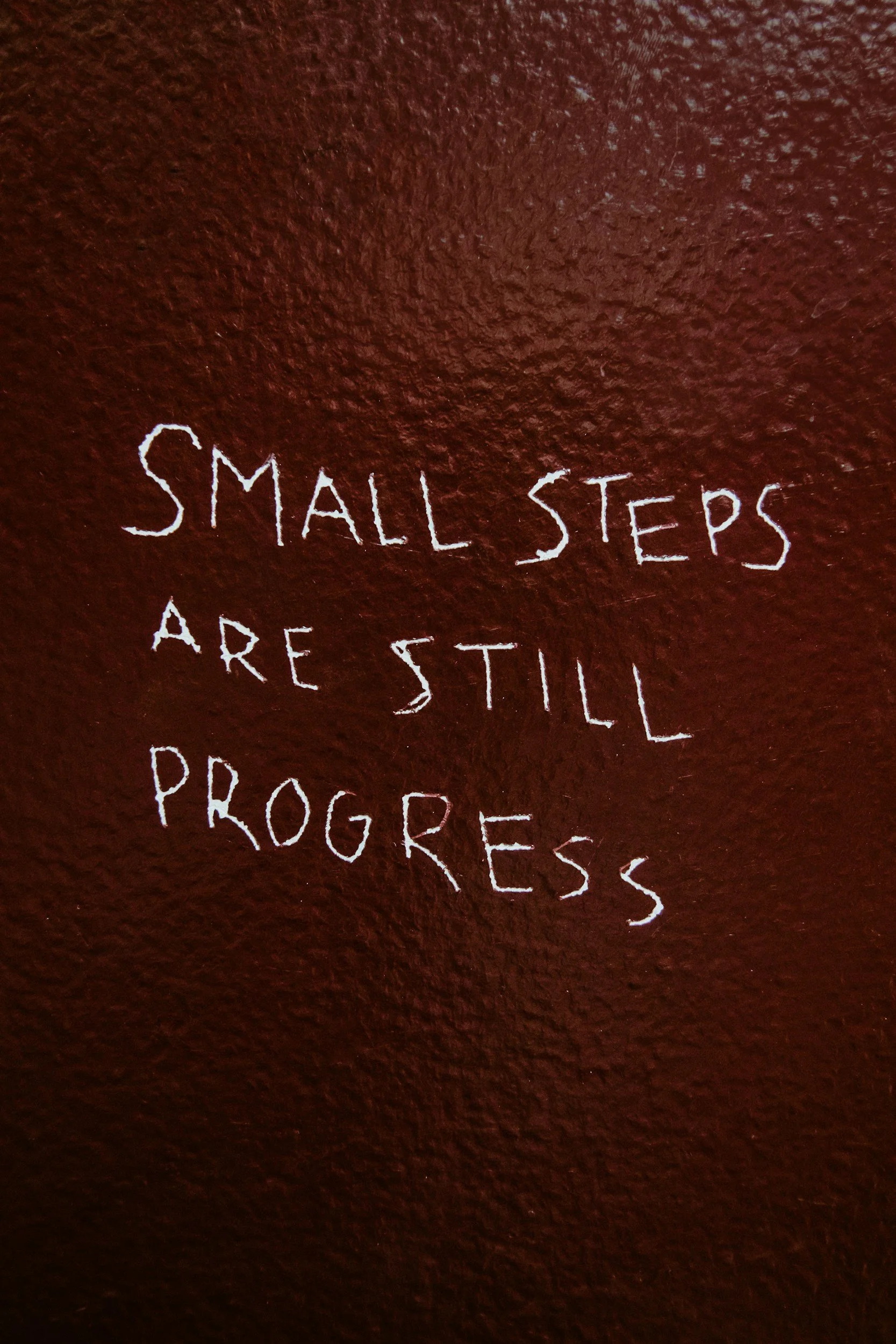
Progress Looks Like Stairs, Not a Ramp
Progress doesn't follow a steady upward line. It resembles stairs, with periods of visible progress, plateaus, and further progress.
During plateaus, you're consolidating previous gains. Your body adapts at levels you can't easily see or measure. To put it scientifically, you are improving cellular efficiency, neural coordination, and metabolic function.
Just because you don't see changes doesn't mean nothing is happening. Yeah, science!
Life Gets in the Way
Stress, sleep, nutrition, hormones, and life circumstances all affect your body's ability to show visible progress.
High stress? Your body prioritizes stress management over building muscle. Poor sleep? Recovery suffers. Increased demands? Less energy for adaptation.
Your training might be consistent, but other variables affecting results aren't always stable.
The Mental Shifts That Actually Help
When progress slows, your mindset determines whether you continue or quit.
Stop Comparing Present to Imagined Future
What doesn't help: “I should be able to lift heavier by now.” or “I should look different.”
What helps: “Three months ago, I couldn't do a single push-up from my knees. Now I can do five from my toes."
Compare the present to the actual past, not to your imagined ideal future.
Expand Your Definition of Progress
If progress only means weight loss or muscle gain, plateaus will always feel like failure.
Progress also includes:
Building sustainable habits
Developing consistency
Improving your relationship with movement
Increasing knowledge
Building resilience through challenges
Creating routines that fit your life
These are legitimate even during physical plateaus.
Shift Focus from Outcomes to Actions
Outcomes you can't control during plateaus: Weight changes, muscle growth, appearance shifts
Actions you can control: Showing up, following a routine, maintaining consistency, eating adequately, sleeping enough
During plateaus, focus on what you control.
Remember Your Timeline Is Yours
Social media shows everyone's highlight reel. Someone's month 12 compared to your month 3 creates discouragement.
Compare today to your past self:
Six months ago vs. today
Where you started vs. where you are
What you couldn't do vs. what you can do now
Your only relevant comparison is your timeline.
Practical Strategies for the Plateau
Beyond mindset shifts, specific actions help maintain motivation.
Track What's Actually Changing
If you only track weight or appearance, you miss most of what fitness affects.
Track instead:
Energy levels throughout the day
Sleep quality
Mood and stress management
Small strength increases
How clothes fit
Ease of daily activities (stairs, carrying things, playing with kids)
Consistency (showing up is progress)
Write down weekly: “What's different from last month?” Notice anything that's changed?
Celebrate Showing Up
Showing up during a plateau is harder than showing up during visible progress. That deserves recognition, and you’re being really brave about it.
You're maintaining routine when you're not seeing results. You're sticking with it when motivation is gone. You're building discipline.
That matters more than most people realize.
Take Monthly Progress Photos
Physical changes happen too slowly to notice day-to-day.
How to use photos in a helpful way:
Monthly photos, same lighting, same time of day, same clothing
Don't look between monthly check-ins
When you do look, compare to 3+ months prior
Photos reveal changes you can't see in the mirror.
Please note: it is important to follow a timeline, but your worth is not determined by the mirror. If a progress photo causes the negativity to multiply, find other ways above to track progress.
Skip this if photos increase anxiety. They're tools, not requirements.
Reconnect With Your Why
Plateaus make you forget your original motivation.
Ask yourself:
Why did I start this?
What was I hoping to feel or achieve?
If I were to stop right now, what would that cost me?
Occasionally, your “why" evolves. Maybe you started for weight loss, but now value how movement affects your mood. Both are valid.
Reconnecting with your own purpose helps maintain direction.
Adjust Expectations to Reality
Maybe your expectations were unrealistic.
Unrealistic: Lose 10 pounds monthly → never plateau → constant linear progress
Realistic: Lose 4-8 pounds monthly with fluctuations → plateau every 6-8 weeks → stair-step progress pattern
As silly as the above may seem, no one plans to plateau as a goal, but adjusting your expectations can align with how change actually happens.
When to Actually Change Something
Plateaus are expected, but an endless plateau might mean something needs adjusting.
Wait 6-8 Weeks Before Changing
True plateau lasts weeks, not days. Week-to-week fluctuation is normal.
After 6-8 weeks of genuine stall, ask:
Are you tracking accurately? Maybe progress is happening, but your measurement isn't capturing it.
Are you increasing the challenge? The same routine indefinitely won't create continued adaptation. Are you adding weight, reps, sets, or difficulty?
Is your nutrition aligned with goals? Under-eating prevents muscle growth. Overeating prevents fat loss.
Are you recovering adequately? Sleep, stress, and rest days all affect progress. Is something compromised?
Has your body fully adapted? Time to change exercises, rep ranges, or approach?
Make Small Adjustments First
When change is needed, small adjustments often work better than a complete overhaul.
Small adjustments:
Add one set to exercises
Increase weight by 2.5 - 5 pounds
Add one workout day
Change rep range
Swap similar exercises
Complete overhaul:
Entirely new program
Different training approach
New exercise selection
Start small. Overhaul only if small adjustments don't work after 4-6 weeks.
Don't Change If...
Don't change approach if:
It's only been 2-3 weeks
You're seeing some progress, just slower than you want
You still feel challenged by workouts
Life stress is temporarily affecting results
Changing too frequently prevents progress just like never changing does.
Every Long-Term Journey Includes Plateaus
Every successful fitness journey includes multiple plateaus. Every single one.
People maintaining fitness for years experience countless plateaus. The difference between them and those who quit is how they respond.
They don't:
Interpret a plateau as a personal failure
Quit because progress isn't constant
Expect linear improvement indefinitely
They do:
Understand plateaus as normal
Maintain consistency through them
Adjust their mindset and, sometimes, their approach.
Remember that long-term trajectory matters more than short-term fluctuation
You will plateau. Multiple times. Guaranteed.
The Long View
Fitness isn't a 12-week transformation. It's building upon practices that will serve you for decades.
That could include periods of:
Rapid progress
Slow progress
No visible progress
Regression (injury, illness, life)
Recovery and rebuilding
All are expected phases.
The question isn't: “Will I plateau?”
The question is: “How will I respond when I plateau?”
Progress will resume. Sometimes quickly, sometimes slowly.
Your job isn't forcing it faster through stress and self-criticism. Your job is to maintain consistent effort and a positive relationship with the process, even when visible results pause.
That's not settling. That's understanding how sustainable change actually works.
